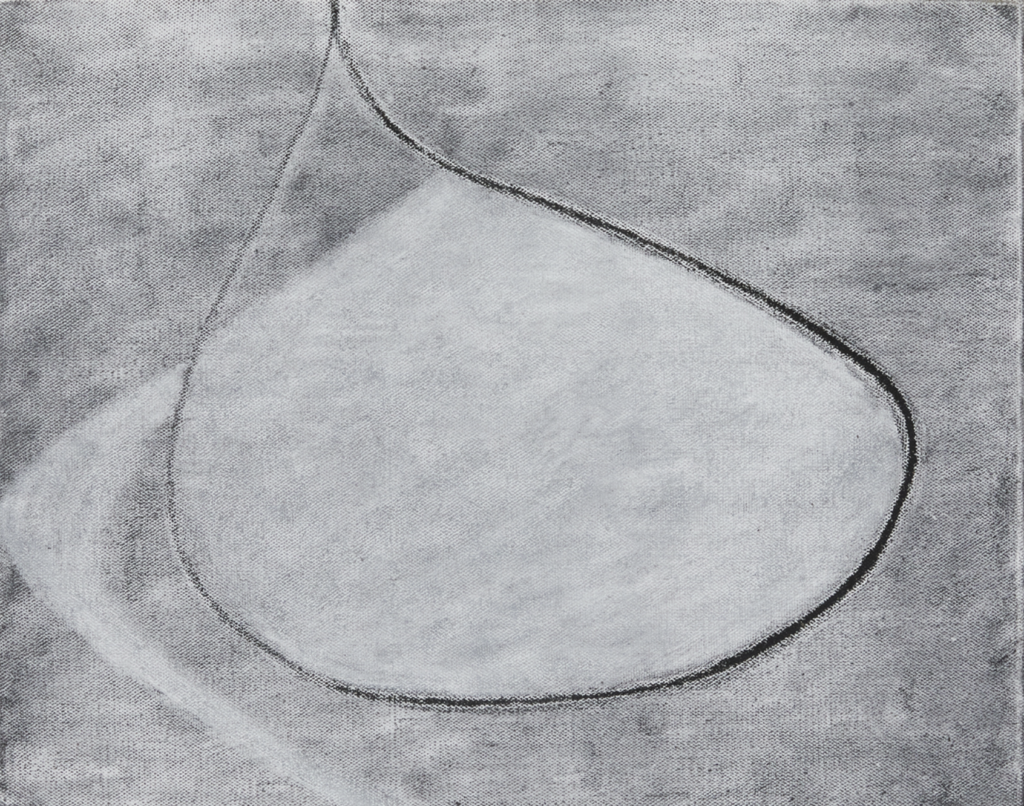
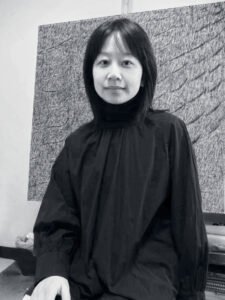
胡媛媛的绘画,记录的是一种“遭遇”。这遭遇是面向人群、生活所形成的意识流。她的敏感与关于视角的转换总能将那些日常事物与某种动机产生连接。因此,她的绘画并非现实主义的客观描摹,而是刻画与对象的遭遇。物、时间以及感觉都失去了其稳定、固定的指称性,没有必要的解释,但同时却产生了想象的条件。由此成为一种书写,一种在坚决的消逝与强烈的存在之间的“感觉的逻辑”。
Read full text
胡媛媛的绘画,记录的是一种“遭遇”。这遭遇是面向人群、生活所形成的意识流。她的敏感与关于视角的转换总能将那些日常事物与某种动机产生连接。因此,她的绘画并非现实主义的客观描摹,而是刻画与对象的遭遇。物、时间以及感觉都失去了其稳定、固定的指称性,没有必要的解释,但同时却产生了想象的条件。由此成为一种书写,一种在坚决的消逝与强烈的存在之间的“感觉的逻辑”。
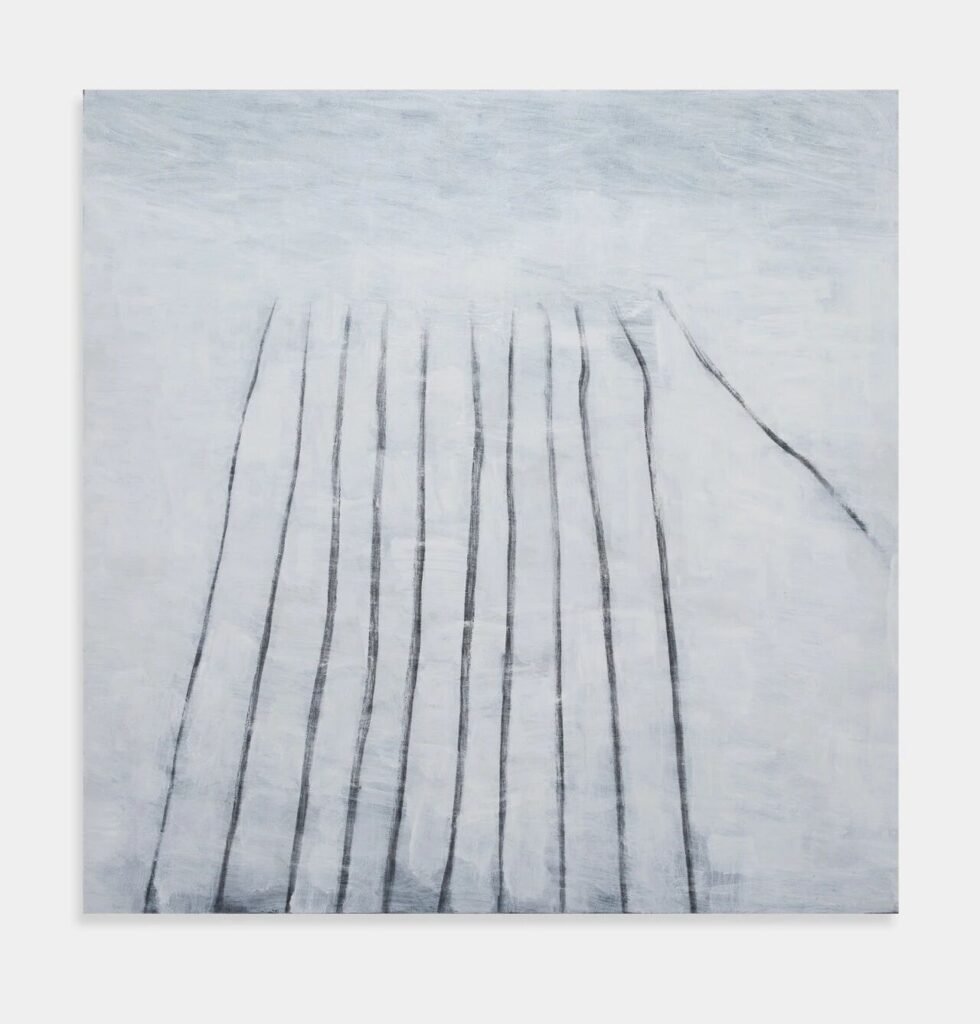
▲《凛冬将至》(Winter is coming),100×100cm,布面综合,2026,©艺术家及弄空间
In Hu Yuanyuan's works, the subjective vision is actively suppressed. The remaining texture, the metaphor of things, and the expansion of traces make the picture appear silent and vast, as if filtered through half - closed eyes. This inevitably reminds people of Martin Jay's famous concept of "Downcast Eyes". Allen Ginsberg once demonstrated it like this: "Lower your line of sight to about 6 feet (about 1.83 meters) in front of you and reduce its focus. He taught me that this kind of staring allows people to engage in meditative contemplation rather than analytical examination of the external reality. It avoids the distractions brought by daily visual experience and enables people to better understand the unity between the internal and the external. It does not anxiously look forward to an uncertain future but focuses on the fullness of the present. Moreover, it can eliminate the potential dominance, penetration, alienation, objectification, and even violence of the stare..."
Hu Yuanyuan's paintings with a "low - light" effect imply the same perspective. They create a blurred zone between the internal and the external, the subject and the object, the recognizable and the disintegrated. In this zone, there lies the wakeful sleep, the silent thunder, and the hidden manifestation. She grew up in Jingzhou, Hubei. The historical traces and the growth of the land have made her feel the solemnity and grandeur of a "place" and cultivated her sensitivity and simple perception of things in daily life, such as angles, hardness, marks, and shapes. Her continuous research and writing in philosophy provide the motivation for continuous discovery in daily life. She even directly extends her writing to the painting, making it part of the work. The sketches in the exhibition will allow the audience to see her efforts in capturing the characteristics of the objects.
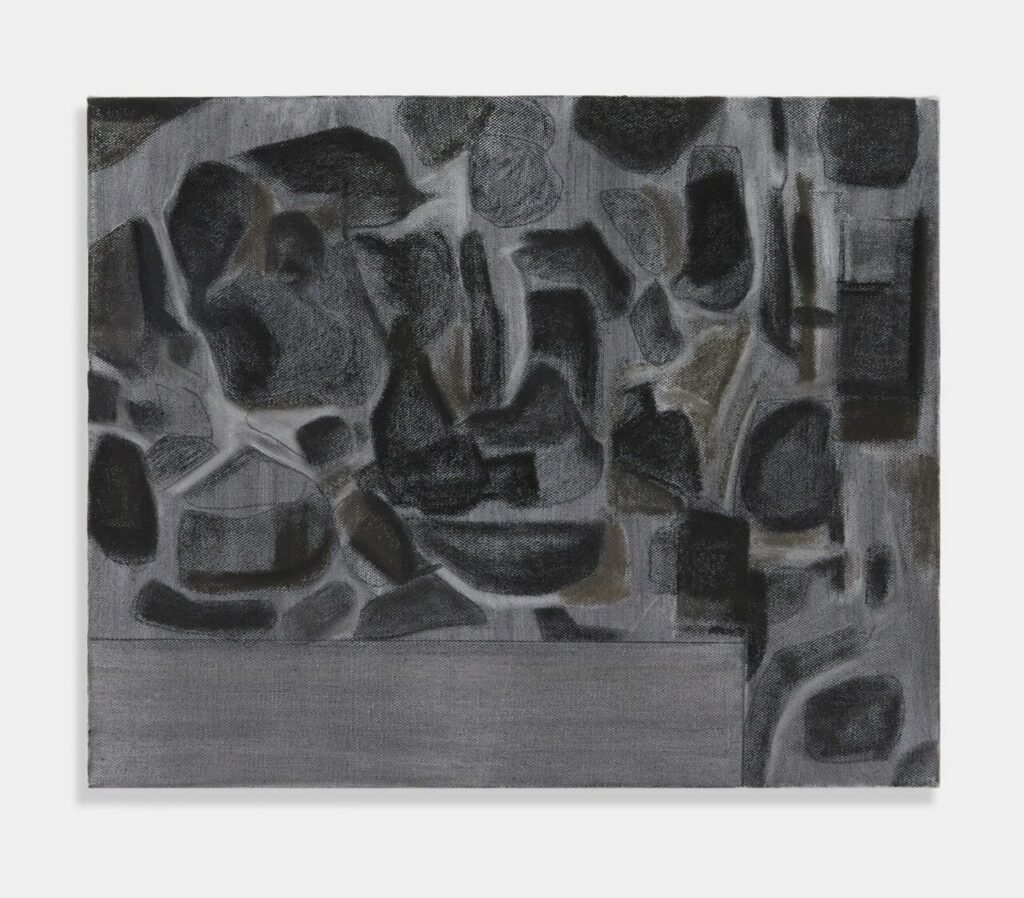
In addition to paintings of daily objects or scenery, the exhibited works also include those painted based on news screenshots of major events around the world. Although the titles of the works are very specific (such as "Scenes of the Israeli Army's Recent Attacks on Lebanon"), the pictures have the same sense of abstraction: the map of the earth is like a fragile and loose wall, the sky illuminated by the fire turns into the setting of a theatrical stage, and the stare at the war machine reveals the cruelty of mediation and restraint. The "absence" of people does not mean erasing the suffering but leads to a kind of contemplative mourning. Hu Yuanyuan has re - configured the order of the visible and the sayable about war in her paintings. By preserving the sky, the earth, and some continuously existing state structures, as well as the overall atmosphere of war or catastrophe, she tries to approach what Jean - François Lyotard calls "the unpresentable," maintaining respect for the events and the solemnity of commemoration in a recordable and readable painting form.
Hu Yuanyuan creates a parallel world with her paintings. In this world, all boundaries disappear. Emotions begin to well up on the surface of things and gradually seep into their interior. In such a silent and focused encounter, the world and people achieve a brief reconciliation, allowing them to settle with each other.
▲《以军近日袭击黎巴嫩画面》(The recent attack by the Israeli army on Lebanon),40×50cm,布面综合,2025,©艺术家及弄空间
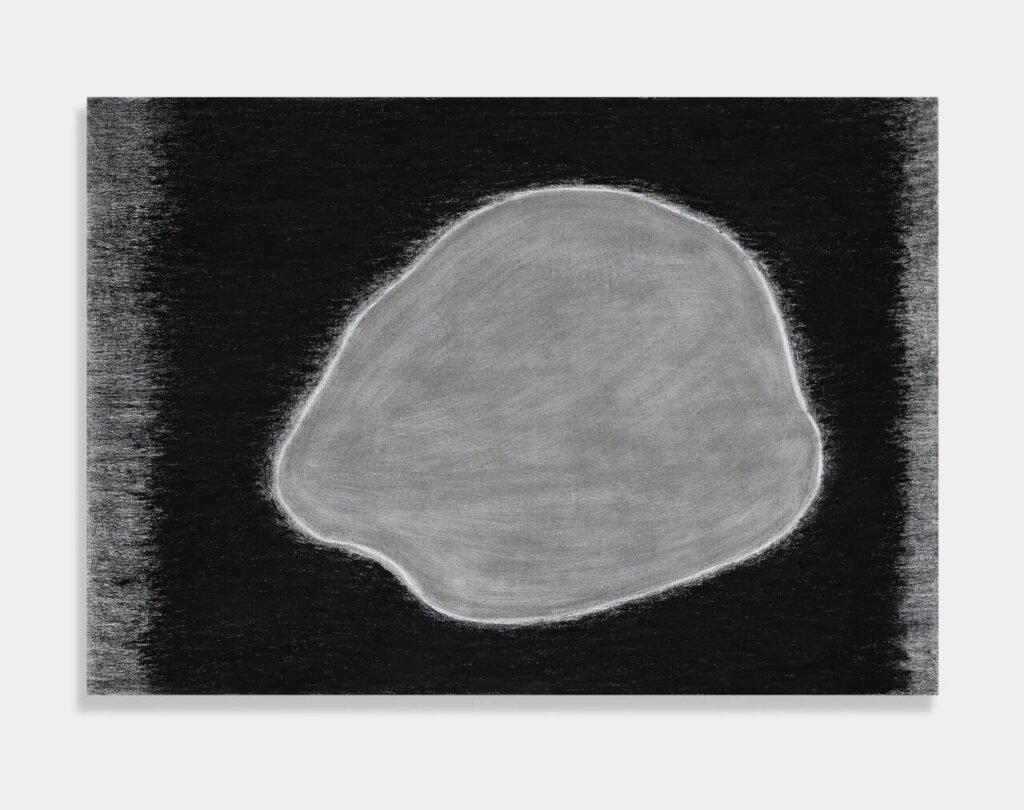
▲《辐射》(Radiation),70×100cm,布面综合,2026,©艺术家及弄空间
Exhibition|Guangzhou LongSpace
2026.3.7-4.19
View opening tour and reception
展览现场与创作实践
胡媛媛的绘画注重观看与思考之间的“遭遇”。她将日常景观、生活经验与新闻资料相互编织,多样化角度的转换使作品成为进入和对话复杂现实的视窗。她所描绘的地缘政治冲突和热切生活瞬间既是“前台”的表现主体,亦是“后台”中值得思索和再叙述的具身语境。在胡媛媛的创作历程中,物体、事件与感官逐渐脱离固有的指称和主客关系,在感性与理性、凝视与理解中展开更深刻的感知实践,以揭示隐藏在图像表层之下的历史话语、制度结构与情感经验。
胡媛媛的创作底色基于长期的阅读与思考,而非单一的图像冲击与技术表现。新闻报道、政治思辨及生活动态等多种境遇在她的实践中不断穿梭和交织,这种叠层视角促使她跳脱出刻板评价体系对画作“好看”的桎梏,将其延续为随笔和交流的新路径。胡媛媛并不刻意通过画面对议题给出明确定义与阐释,而试图展现“那些看不见的“,即隐藏在图像背后悬而未决的对立、结构与处境,以此对多变的现实状态做出记录和回应。她的图像呈现为理解和探讨的入口,她和她的作品期待不同的个体围绕这些事件展开不同的思考:关于国际秩序如何被瓦解、世界格局如何被重组,以及关于人如何在时代的疑惑、幻灭和重塑中把握具体的生命经验。
胡媛媛的许多作品以当下不断变化的地缘政治为背景。在这些情境中,人群,地区和意识形态之间呈现出强烈的两极:一方面是被困于夹缝中的个体,他们在战争、冲突或分裂中承受创伤性的后果;另一方面,则是那些在更宏观层面上决策和控制局势的实体。但她并不囿于话语二分法的束缚,仅仅在绘画中给出感伤主义的道德裁决,而是更关注这压迫性结构所形成的伦理对抗:被困境束缚的人与制造困境的人之间的行动和联系。
从俄乌战争到以伊博弈,从军备竞赛到移民权利,胡媛媛观察到,面对远方发生的事件,艺术并不总能直接介入,也难以暂停现实的滚滚车轮。常常人所能够做的只是观看、记录,并在繁杂的信息中形成认知与再述。因此,她的绘画成为对“国际秩序之切片”的一种回应。她承认自身与事件之间的距离,承认创作无法迅速改变现代性政治冲突,也承认暴力与苦难的永恒存在,但她仍然对人文主义实践抱有希望。她坚定地相信并实践观看、记录和感受的力量,并与观者一同超越固有的语境和想象,讨论和关注多面图景中的被排斥,被忽视,被沉默的种种群体与境况。她的创作走向更广泛的世界性愿景,“无穷的远方,无数的人们,都和我有关”。
与远处的复杂痛楚并行的,是她对近处幽微瞬间的持续关注。在无常的时代错位中,平凡琐碎的日常反而更显闪亮,却又更难以被注视。稍显重复的生活节奏、微小短暂的喜悦,几点一线的惯习,被胡媛媛诠释成可依靠的现实锚点。正是在这些看似普通的生活面向中,人得以重新面对自我的本真价值:“一日日度过的所谓日常,本身就是接连不断的奇迹”。通过感知这些难以察觉的细枝末节,胡媛媛鼓励观者一同在政治性的凝滞面孔中保持内在的稳定。同时,她的作品更是一种尝试撬动存在主义危机的方式,即通过对生活的参与和描绘解决当前无意义感的蔓延。对夏天热炸了的鸡蛋感到惊讶,对紧迫催促的工作时间感到疲惫,对进食残留的葡萄梗形状感到有趣,胡媛媛诚实地记录和反应林林总总堆叠而成的不易看见却熠熠生辉的发光时刻。她人文主义的目光与笔触之下,苔花般微小的生活瞬间,绽开成无限的处境共鸣。
这种理解也与艺术家个人经验的流动有关。早年的生活状态曾让她认为人可以未经深思熟虑将自身置于极端的边缘。而随着心智的成熟以及对世界更广泛的接触,她对生命的理解和感受也逐渐发生转变。人的生存与生活不再被视为可以轻易放弃的客体,相反,它在多样化事件和日常之中不断显现出值得珍惜的意义。正是在这样的转变之中,对生活的确认与对世界的关注逐渐交织在一起,使她的创作既保持对远方脆弱现实的敏感,也始终回到身边具体而真实的生活之中,如同沈从文墓碑所题,“照我思索,能理解我;照我思索,可认识人”。
现场文字与图片来源:弄空间微信公众号《现场 | 胡媛媛个展:无关事件》(2026年3月13日发布)。