
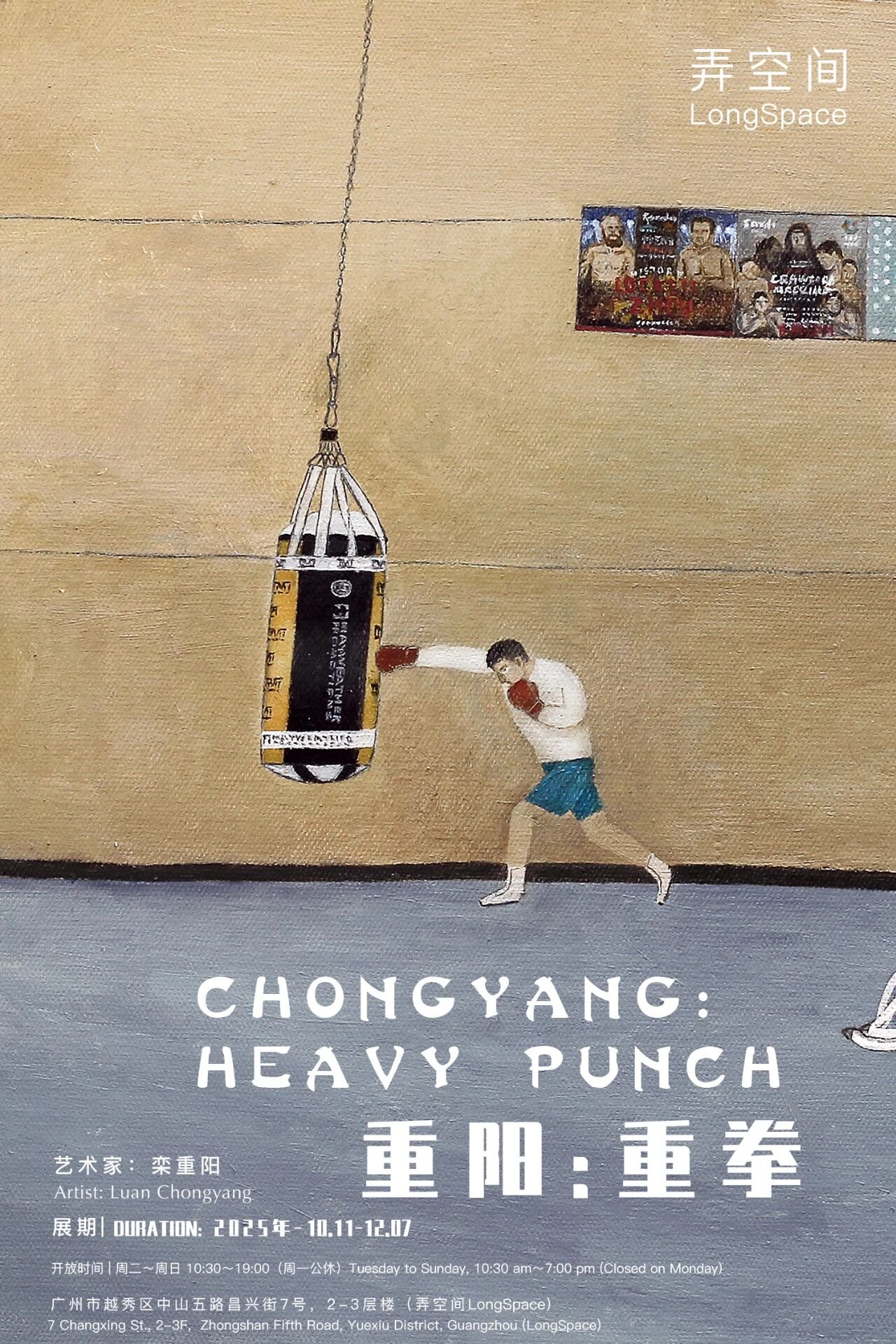
ChongYang: Heavy Punch
Long Space is hosting the first solo exhibition Chongyang: Heavy Punch, marking the first concentrated presentation of artist Luan Chongyang’s (born 1990) paintings from the past decade. The exhibition features approximately 30 works, including oil paintings on canvas, wood panels, and drawings on paper, divided into two main themes: the boxing gym and local features.
Luan Chongyang's artistic practice began with depicting familiar local spaces, such as train stations, docks, construction sites, and courtyards. The tone of the city where he lives, Zhengzhou, is reflected in the color palette of these works—gray, earthy yellow, and brown—while large areas of dry, dull green defy easy interpretation as plant life. In Central China, rows of gray urban buildings rising from the ground align with local customs and lifestyle patterns, shaping the rules that govern daily life. These internal laws are mirrored in Chongyang’s compositions, where the rectangular structure serves as the stabilizing element in the painting, and also as a metaphor for his inner home. Within this structure, the artist places various short, strip-shaped "small objects", which can be people, animals, boats, and container cars, among others. These works, representing the theme of "local features," are displayed on the third floor of Long Space.
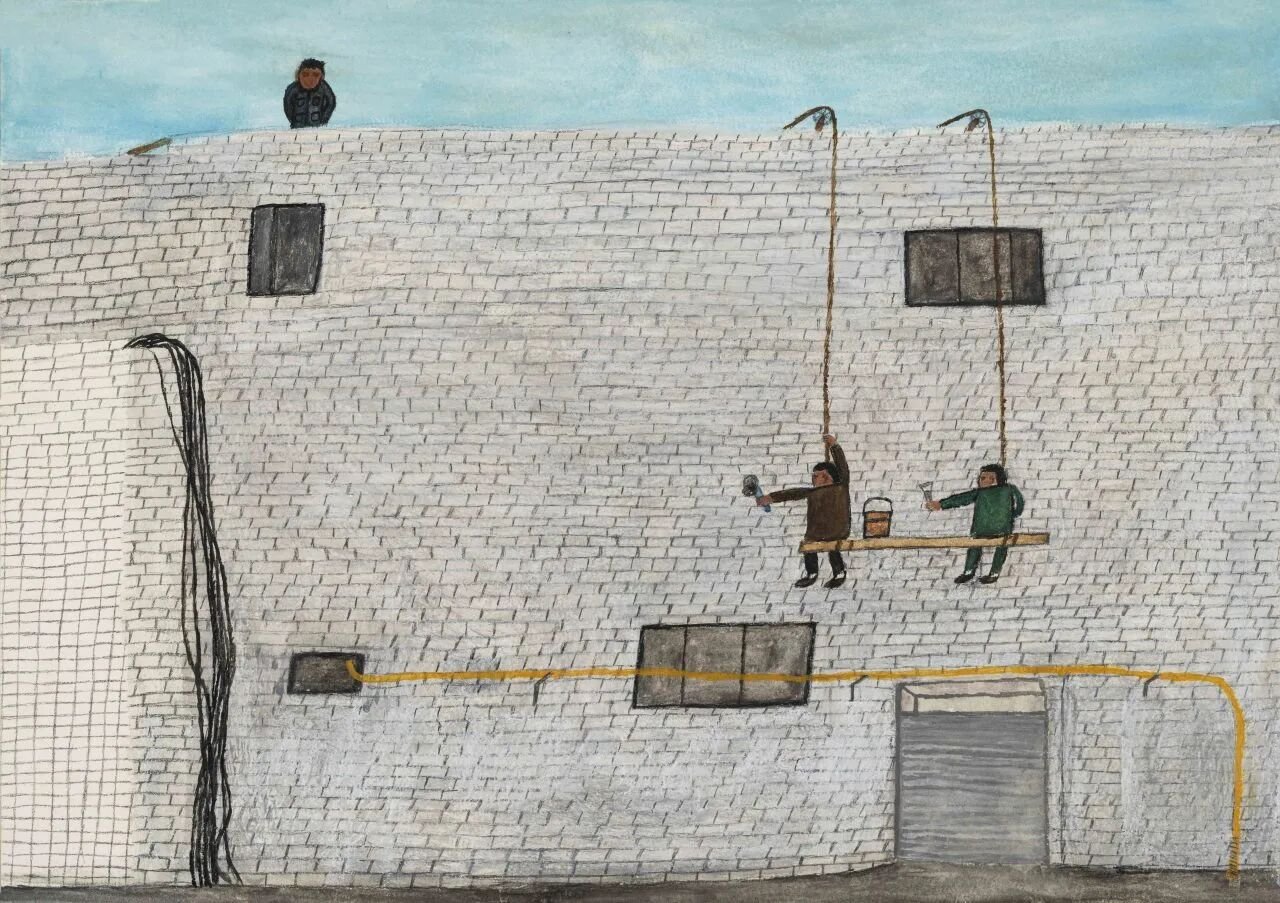
▲栾重阳,《刮墙》2022,纸本综合,36x51 厘米,©栾重阳
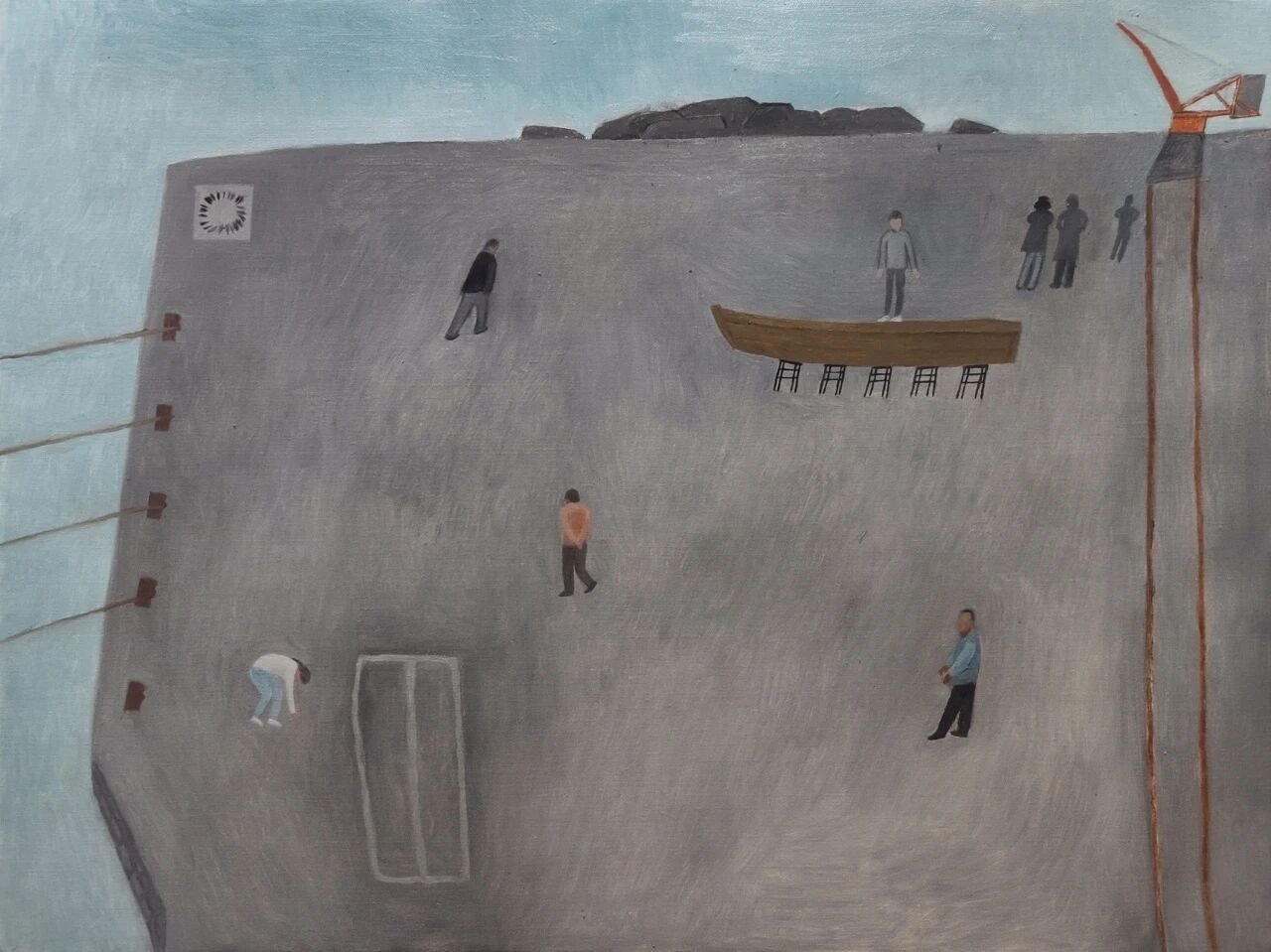
▲栾重阳,《码头》2019,布面油画,60x80 厘米,©栾重阳
The second floor of Long Space showcases more recent works. Moving from large-scale regional rectangular formats to smaller ones representing the boxing gym, the most noticeable elements are the boxing ring, the walls, cabinets, and posters or photos on the gym's interior walls. Chongyang uses these elements to create another small world he loves, shaped by his passion for boxing. There are certainly many works about boxing in the art world, but few persons are both boxers and artists who paint boxing subjects, like Chongyang. In this series, he depicts not the intense boxing matches, but the gym itself—a familiar environment for him. In contrast to famous boxing works by American artist George Bellows (1882-1925), whose boxing scenes focus on the fights, Chongyang’s paintings of the boxing gym are intimate and approachable. Using the same method he applied to depicting regional characteristics, he arranges boxers and training equipment in small, rectangular forms within the frame.
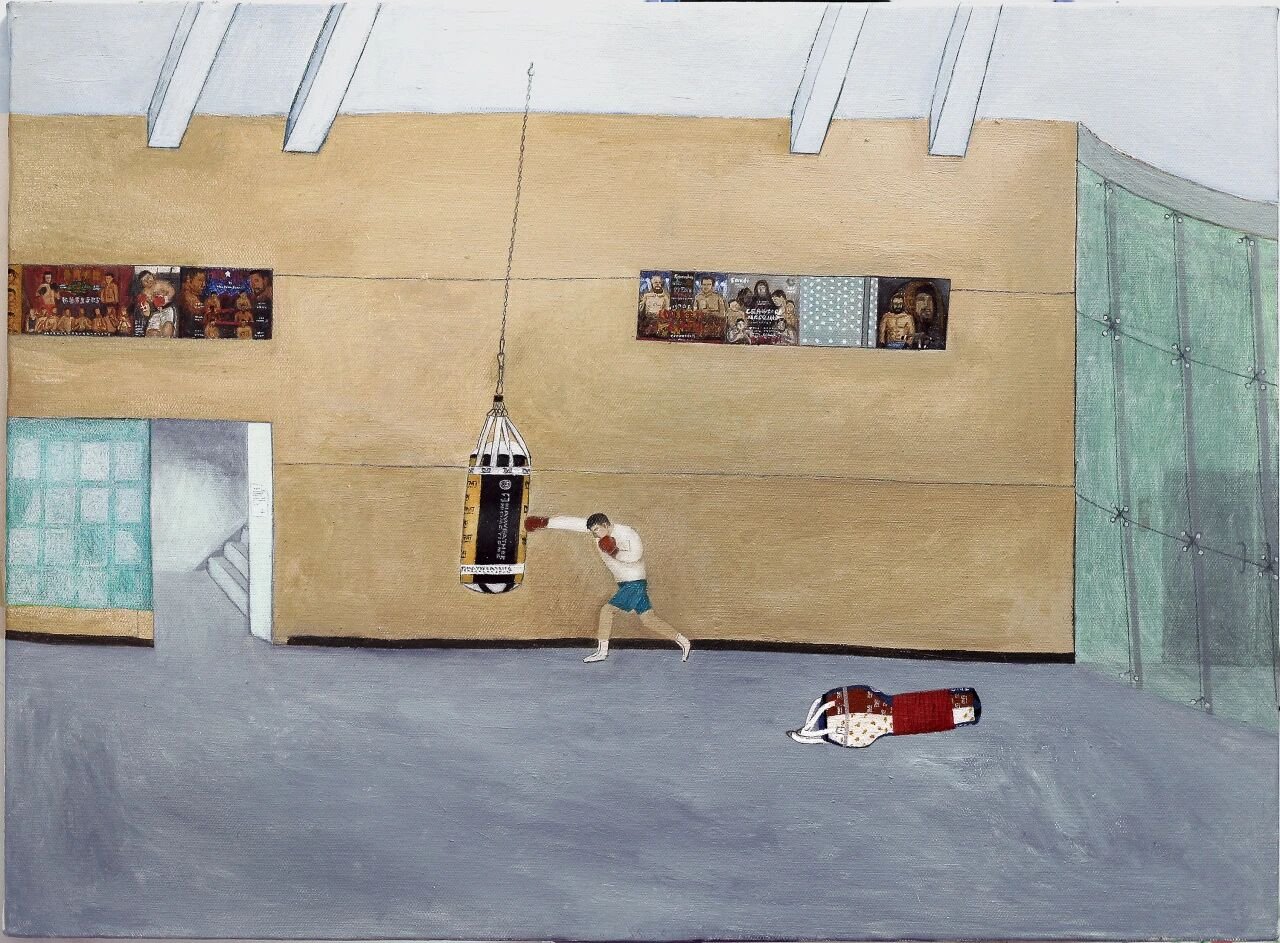
▲栾重阳,《拳击》,2025,布面油画,40 x 60 厘米,©栾重阳
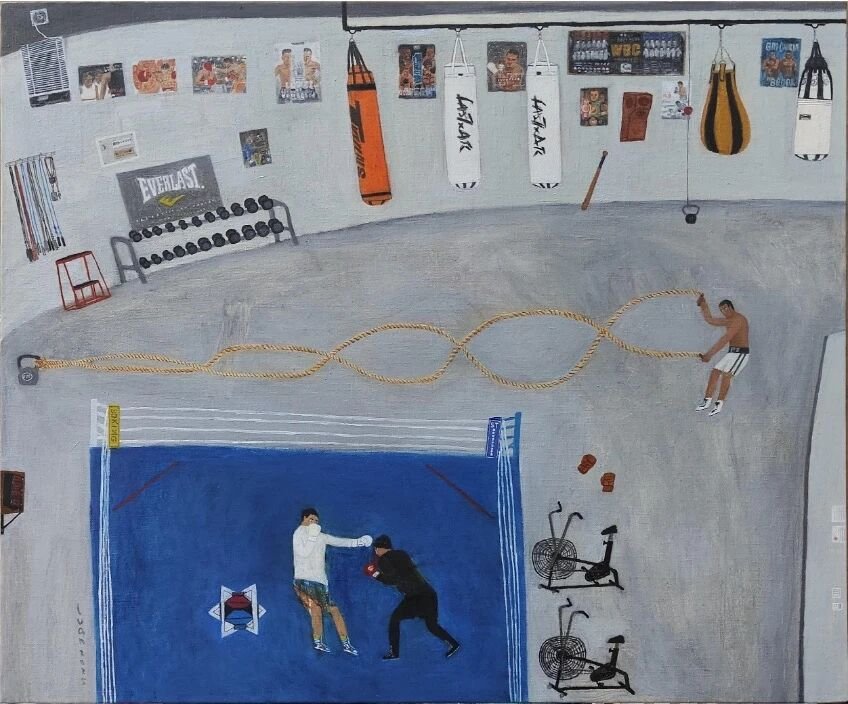
▲栾重阳,《拳馆》,2025,板上油画,50 x 60 厘米,©栾重阳
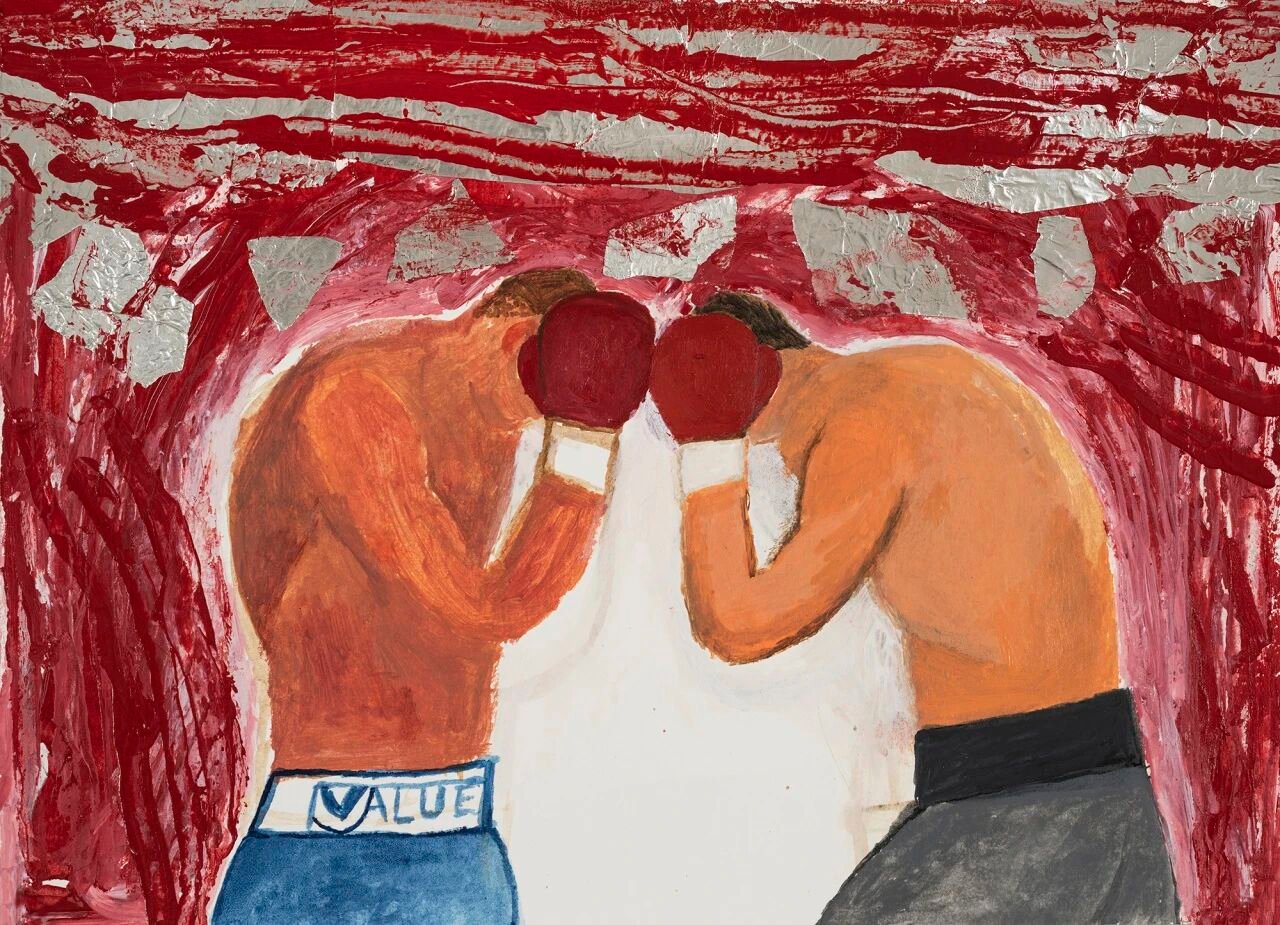
▲栾重阳,《无题》,2023,纸本综合材料,30 x 40 厘米装裱尺寸,©栾重阳
In a past interview, Chongyang has mentioned the influence of the Helan Mountains Rock Carvings on his art, which is subtly reflected in his works. His flattened compositions, with figures and objects outlined, resemble ancient rock carvings of animals or human forms etched into vast rock faces. These primitive carvings, though small in the vastness of nature, are striking due to their simplicity and vividness. This perception of objects gradually internalizes and merges into Chongyang's works, without directly copying the style of rock art. He has also expressed admiration for the works of Spanish painter Antoni Tàpies (1923-2012) and French painter Henri Rousseau (1844-1910). Though born in different times with distinct painting styles, both artists share a tendency toward a flat approach to the canvas, which has influenced Chongyang. Without his mention of these influences, it would be difficult to trace such traces in his works. This method of internalizing external knowledge has contributed to Chongyang’s effortless command over his compositions, forming the structure and style of his art.
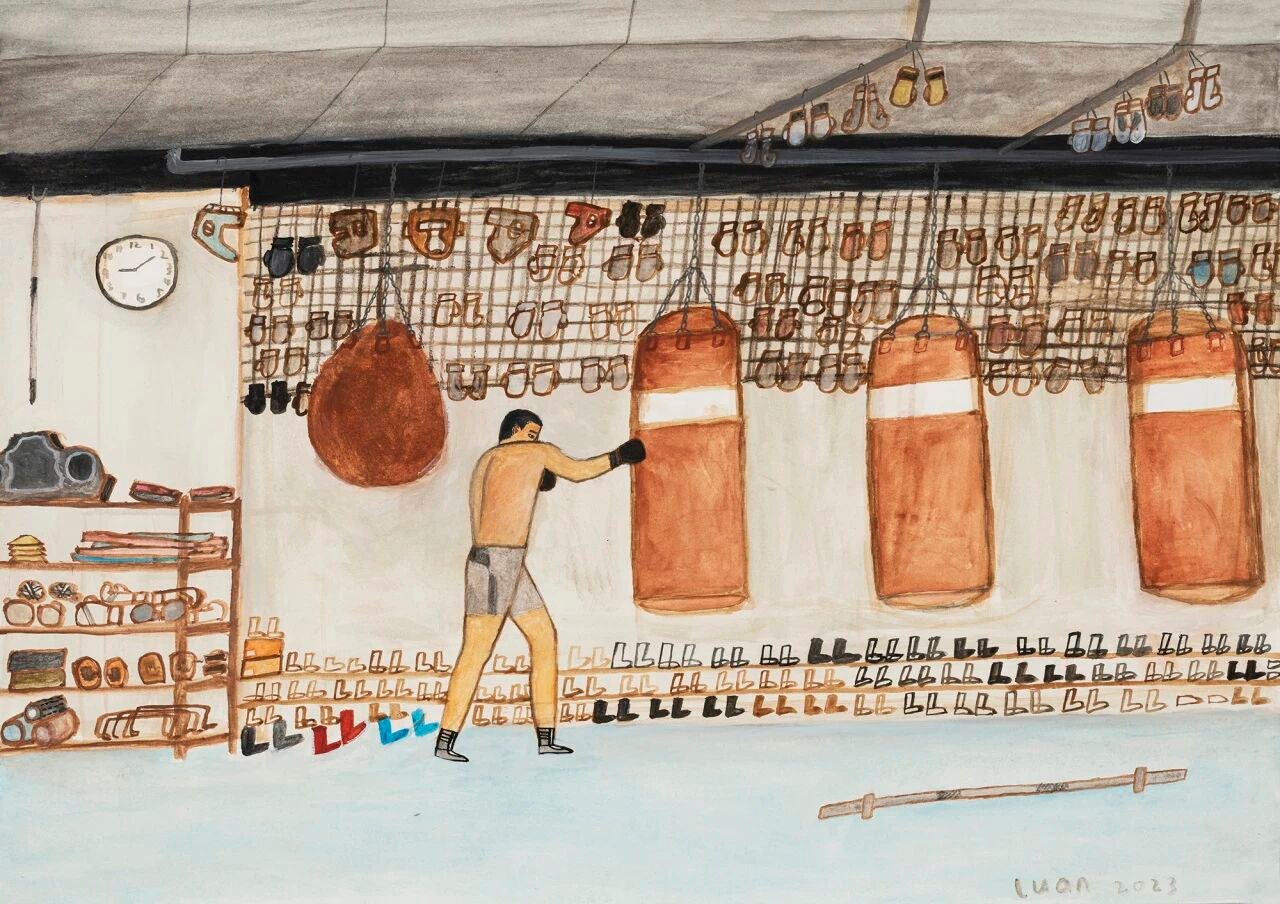
▲ 栾重阳,《练拳少年》,2023,纸本综合材料,36 x 51 厘米,©栾重阳
“Heavy Punchis merely the title of this exhibition, which does not reflect Chongyang's usual approach to people or his paintings. However, in the realms of art or boxing, Chongyang faces challenges head-on and delivers a strong punch when necessary.
Exhibition|Guangzhou LongSpace
2025.10.11-12.17


