
Dialogue Guests:
Yang Di: Video/moving image artist
Yan Xiaodong: Independent curator
Lin Yilin: Project initiator and planner
Moderator: Jing Yitian LongSpace
Yang Di: I think we need to return, at the very least, to the quality of the image itself.
Yang Di:Let me start with my own educational background. I began studying new media art at Sichuan Fine Arts Institute between 2008 and 2012, focusing mainly on narrative short films. At the time, I had no intention of pursuing contemporary art — I wanted to make films, specifically a feature-length narrative of my own. Upstairs, you can see Anorexia, my undergraduate thesis work from 2012, which was selected for several film festivals. My dream back then was to make a narrative feature.Between 2012 and 2014, I was doing commercial work — shooting advertisements in Beijing.

Then I moved to Germany. From 2015 to 2020, I studied video and video installation at the Kunstakademie Düsseldorf. My two main professors were both sculptors, and each pushed my thinking in different directions. What I felt most strongly about the school was, first, its focus on art itself, and second, its emphasis on the translation between media. Take the famous Düsseldorf School of Photography: those photographers originally came from sculpture, but they used the photographic medium to explore qualities inherent to sculpture, or approached their subjects through typology. So one defining characteristic of the school was this constant attempt to discover the essential properties of each medium by moving between them. During that period, I experimented widely with painting, sculpture, and especially installation.
In the end, I returned to the medium I know best: moving image. I began exploring intersections between video and sculpture, and between video and the public realm. Before 2020, my practice centered primarily on the medium of image itself. Just as people today still talk about "painterly qualities," back then I was deeply invested in asking: what are the qualities specific to the moving image?
Safe Word was my MFA thesis work, made in 2020, responding to several significant events during the pandemic. Among them: SpaceX's first successful rocket landing and the prospect of human migration to Mars within our lifetimes, and the killing of George Floyd in the United States, which sparked the Black Lives Matter movement. I participated in those demonstrations. Having lived in Germany for some years, I had genuinely felt the pressures of being an immigrant. I wanted to bring the questions I cared most about at that moment into a work, presented in a place like Germany, almost as a kind of challenge, to make them look at it too.

This work was a major turning point for me. The pandemic, combined with everything I had accumulated over five-plus years living there, enough time to build a real connection with that society, allowed me to place some of the most significant experiences of my life, the experiences of being an outsider, directly into my practice.
I felt that around this time I began to move from the individual toward something more universal, or more public. Of course, the pandemic itself contributed to this. The whole world was living under the same pressure, which naturally drew people toward shared concerns. So from this work onward, I became somewhat more political, thinking about questions of identity politics and personal identity. After 2020, I returned to China. The longer I stayed in Germany, the more I came to feel that society didn't truly concern me. What I actually cared about was: how are my parents doing? How are my close friends? I didn't genuinely care, from the heart, about the white people, the Germans around me. Sometimes I felt that if I kept expressing themes from that context, I was standing on ground that wasn't solid. I had no real footing. So I kept adjusting, hoping to find a way to use my Western experience as a reference point while finding ways to tell our own stories.
Yan Xiaodong: You also described photography as "études, exercises a musician practices to keep their hands in shape." Another word that appeared quite frequently was narrative. Narrative is strongly bound to medium. What a static image can accomplish in terms of narration is naturally different from what moving image can do. And both are connected to subject matter. Throughout your education, it seems like there was a parallel development, one that kept expanding. You mentioned earlier that your ambition was to make films. The shift from narrative filmmaking to video art is a significant one. Did that transformation happen before you went to Germany, or after you entered the Kunstakademie Düsseldorf?
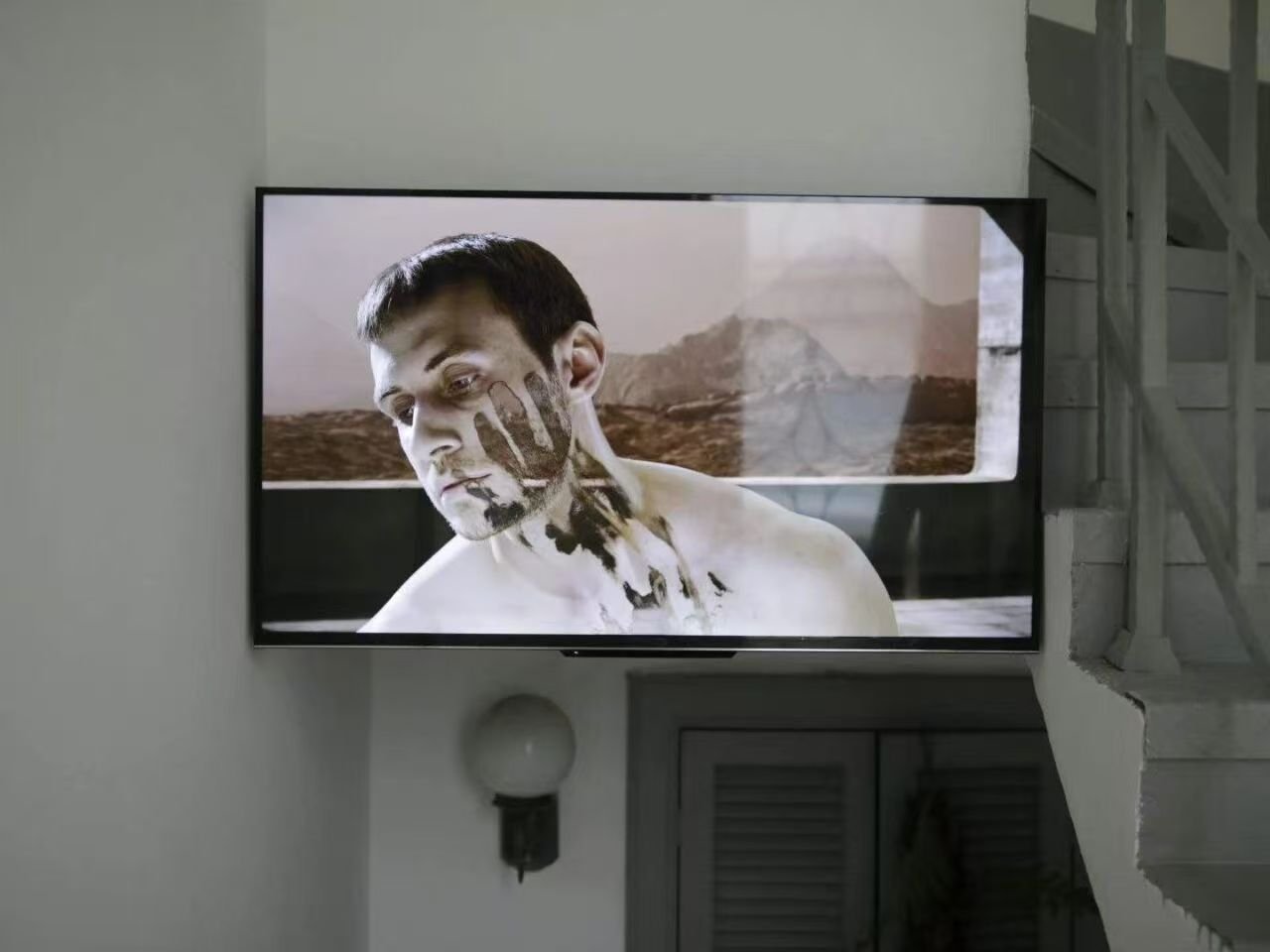
Yang Di:That's a great question. The transformation was one of the most important chapters of my development. You can feel it in Anorexia from 2012: even without dialogue, there's a story running through it. Many of the works I haven't shown here, by contrast, are entirely non-narrative. The biggest shift, I think, is this: in China, the education I received was primarily oriented toward narrative film. But going to Düsseldorf meant entering a contemporary art education, studying the history of sculpture, the history of painting, and so on. I felt myself moving through a process from the figurative toward the abstract. At that point, I extracted narrative from my work. I understood it as a particularly figurative element within moving image, and during that period I made many installation and image-based works. I abandoned story, abandoned narrative, and focused more on discussing the medium itself. But then, in Safe Word and in Dime Novel that you've seen, narrative returned. Because my understanding of moving image had shifted once more. One reason was that I changed professors. My new professor was a French artist who drew a great deal of energy from cinema, literature, and music, then transformed it into her work. I was influenced by her.
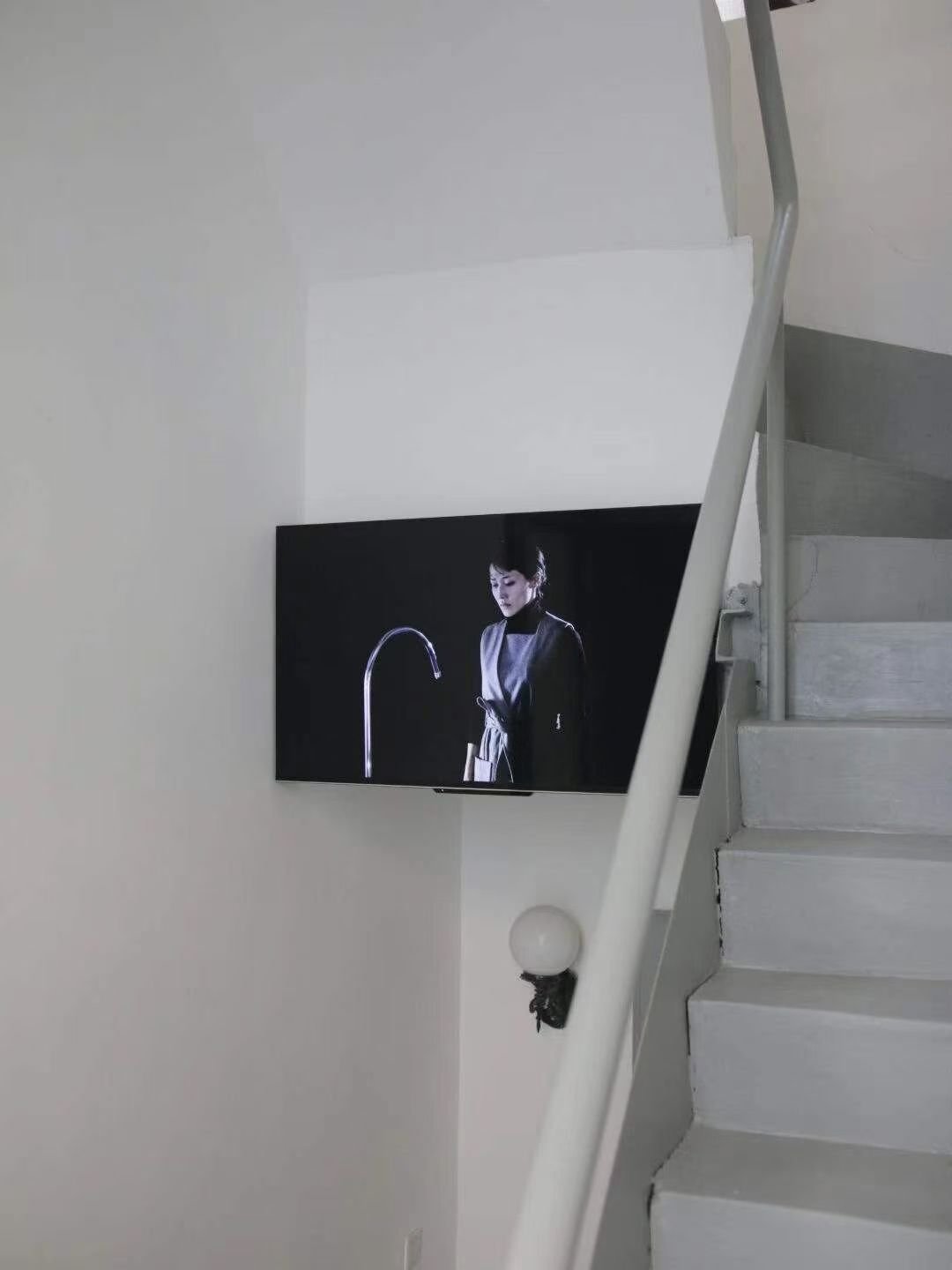
The second reason: when I first began learning about moving image and film, I wanted to understand its essence, what distinguished it from other media, and what its most powerful function was in the contemporary moment. My understanding at the time was temporality: the moving image can offer the viewer a complete, uninterrupted temporal experience. And authenticity. These were the two things I focused on. But as time passed and my learning deepened, I felt that the era had shifted, from the question of "what is an image" to the question of "how do we use images." I felt that in today's great flux, temporality and authenticity may no longer be as important as information. You can see it across museums today: many video works are primarily expressing a position, an attitude, a piece of news, responding to the central questions of the moment, and perhaps that is already enough. So: from narrative, to anti-narrative, and back to narrative again. But with a different relationship to narrative than before.
Lin Yilin:Lin Yilin: Your three works from 2020 feel somewhat different from what came before. Anorexia is a direct expression, there's a narrative inside it, and that narrative aligns with your personal situation at the time: internet addiction and symptoms like that. But with these three works, I noticed something slightly different. The social backdrop you described and what's actually reflected in the films, that direct expression isn't as visible. Is the gap between that context and the work itself something deliberate? If you don't tell us all the social factors that are hidden inside, we can't see them from the film alone. So why did your work undergo this change?
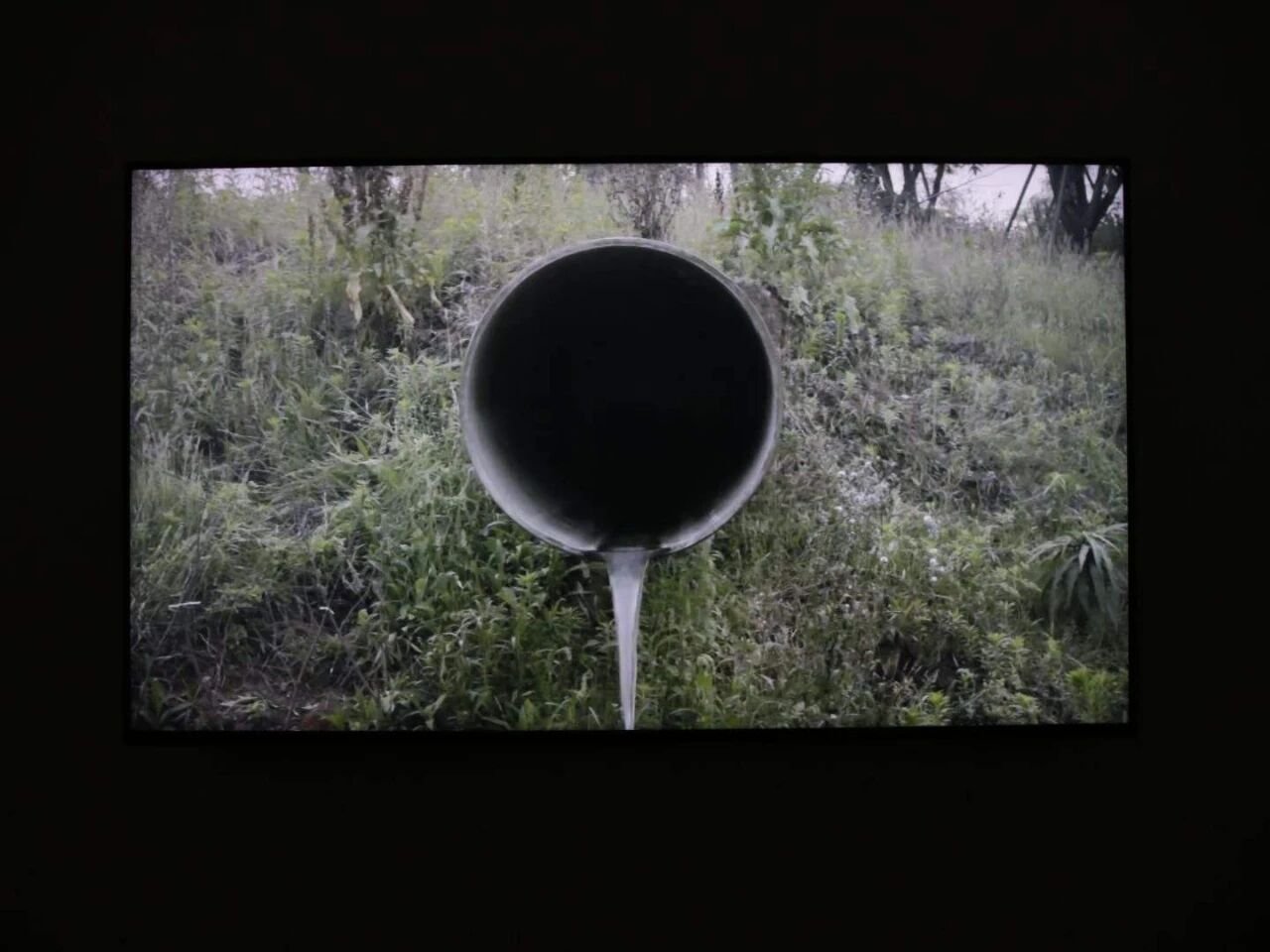
Yang Di:Yang Di: I think it's partly connected to studying in Germany. Many of my classmates worked with a certain kind of aesthetic, and I was gradually shaped by that environment. In my experience, their aesthetic tends to be a little cooler, calm, objective, with a certain distance in the looking. They consider this a kind of critical distance, something like Brecht: not a direct mode of expression. I also think it relates to the state of my life. I was originally a very extroverted person, but in Germany I became introverted, just not as outgoing anymore.
So I began to ask: can the viewer's felt experience come before their understanding? In Safe Word, the measurements, the sharp sounds I added that cut through the quiet, the cold oppressive feeling of the whole thing, what I wanted above all was for the viewer to feel that same pressure while watching, rather than to understand a story. If they want more information, they can seek out the background. But the experience comes first.
Jing Yitian: Why did Lin Yilin choose to include a work from 2012? That's something we were very curious about.
Lin Yilin: I didn't really focus on which year Yang Di made the works. What I was looking for was a set of four pieces that together could form a portrait, or where each individual work could move me. It was only after I selected that piece that I saw it was from 2012. I felt that the small room was better suited for something long and narrative.
Yang Di: Lin Yilin has a great eye. He chose the four works that exhausted me the most to make, that took the most time.
Lin Yilin: In Safe Word, there are two white people, one discriminating against the other. Racial discrimination in America is most visibly mapped onto skin color, onto Black people and people of color. If this film had been made in America, you might expect to see a person of color in that role. So I'm curious: why did you choose this reversal?
Yang Di: It was a deliberate design. I don't think the film is a direct representation of racism. It's more of a question about what racism essentially is. There are two characters, one of whom is an immigration officer. The other is an immigrant, and I also projected some of my own experience at immigration counters into that role. I understood it as a power relationship, an abuse of power. Like the policeman who killed Floyd: that too was an abuse of authority. I placed our present condition into the future as a way to ask more openly what its essence might be. It's also the "distance of observation" I mentioned earlier. By making them both white, perhaps as the people who arrived on Mars first and established power there, they could in turn discriminate against those who came later. This is entirely plausible in a future scenario. Maybe China's Mars base gets completed first, and then we, as East Asians, end up discriminating against white people. It could happen. It's an open inquiry.
Identity is also a significant piece of this. I sometimes get confused about it, and sometimes I joke that as a straight Asian male, it's a bit like being at the bottom of the food chain in the art world. Think about it: some artists carry identities that immediately feel powerful. One Berlin Biennale might be 80% Black artists. This year's Biennale might have many artists connected to Myanmar, to war, or Ukrainian artists. Some of those works might be quite straightforward, providing information more than anything else, without what we'd call a strong "artistic language." But within the larger movement, they function. They respond to urgent contemporary questions. They become words in the curator's sentences. They become effective and important. So, Lin Yilin: how much weight do you think an artist's identity carries in the work, in the context we face today?
Lin Yilin: In my view, I wouldn't emphasize identity. Identity is a product of the broader environment. Whether your work endures comes down to the work itself, your creativity, or how much the work contributes when placed within the larger history of art. Not your identity.
Jing Yitian: Identity might open certain doors in the process, at certain moments, at certain points in time.
Lin Yilin: I have another question. Looking at the history of video art: early video art was quite clearly distinguished from cinema. Nam June Paik used a handheld camera in combination with television screens. The second generation, like Bill Viola, worked in television, so he incorporated television broadcast equipment to produce certain effects. By the late 1990s, some artists began shooting work that resembled cinema. And then, by Yang Di's generation, the production quality starts to look more like science fiction, like Hollywood. Now, video art is facing some difficulties. Do you have any sense of where it might be heading?
Yang Di:Yang Di: I don't think work like mine is even the most fashionable right now. Things like Forensic Architecture, or Hito Steyerl's research-based approach, those are still quite prominent. You can see them across many exhibitions. I recently read an article about "too much research-based art." At documenta, a viewer would need the entire duration of the exhibition to see every work. Installation and performance might be more abstract, less like essay films that simply state their argument directly within the work. If the research is rigorous enough, it can be very important. Essay film isn't a direction I'm particularly drawn to, and I don't know how it will develop. I do think we need to return, at minimum, to what's specific to the moving image, to actually move people. But research remains important. Perhaps the key is to put the research first, rather than placing it directly inside the work. You use research to reshape how you see the world, and then you release that understanding through some other form. I think that might be one direction. Another direction is something like Beuys' concept of social sculpture, using moving image to intervene in society. Recently someone showed us a documentary-style video work that helped reduce a factory owner in Guangdong's sentence from twelve years to six. The work directly participated in society, like social sculpture. The production quality didn't matter; it was shot on a phone. But through moving image, in today's networked world, it created circulation, a kind of entertainment-driven attention, and had a direct, fast, immediate impact on society. I think directions like this are possible, not what I'm personally doing, but I do think these tendencies exist.
Lin Yilin: Have you thought about what new possibilities AI might open up for video art?
Yang Di: My new project is also experimenting with AI, though for now it's mainly one part of my production process, not the whole thing. It handles backgrounds, or handles a particular transformation. I haven't encountered an AI artwork that has genuinely moved me yet. I feel AI art is still fairly early in its development. There isn't yet a full reckoning with what the aesthetics of this medium actually are, what distinguishes them from everything else. A friend of mine went to the Samsung Museum and saw an AI-generated work by Pierre Huyghe that I found quite interesting. It was a constantly shifting image, a picture of something imagined inside a person's mind, using a brain-computer interface. So I do think AI, as a tool for artists, still demands a fairly high level of technical depth. What I sense right now is that its aesthetic comes from the intensity of the technology itself, the algorithm as such. If I were to consider using it, I'd want to find the right moment to integrate it into my own creative lineage in a way that feels genuine.
Yan Xiaodong: AI represents a technological shift, but perhaps what's more fundamental is the expansion it implies at the level of cognition. What I mean is, its impact won't remain at the level of tools. In past cycles of technological change, tools kept becoming more "intelligent." But if we genuinely achieve AGI, artificial general intelligence, that's almost a different kind of being altogether. The relationship would necessarily be a dialogue, even if not an equal one. The difference in processing speed and accessible intellectual resources would be quite substantial. It really is hard to imagine what art would look like if we reached that point, what an artist's practice would be, what forms work might take. But "art," as a whole, as a category of human activity, has always been in flux. So I think art won't disappear. It will more likely enter a new phase.
Yang Di---HeiLianJi An
The video works by Yang Di presented this time were created in moments of predicament, and overall these works do not have an overly obvious pessimistic mood. The strategy he adopts is to bypass conflict and proceed by way of a detour. For example, he uses white actors to “re‑enact” events hypothesised to take place in another space of a Western‑style universe, rather than the major events that happened on Earth in 2020. Using the “greater self” to replace the social present, the focused lens is accompanied by a defocused signified, and the four films selected this time bring about the same atmosphere—ambiguity and emptiness. For example, through a single female character he reflects the exploitation of women by contemporary consumer culture, and the viewer senses that she in the film is in a helpless loop with nothing to choose from.
Yang Di’s films use a sliced manner to penetrate up and down through the “spaces” of various issues; the images are directional, while his thoughts are radiating, and the emotions are internal. These elements constitute the aesthetics of his films. Those characters are shaped in a deep way, and the viewers are drawn along by the roles played by the actors, entering a certain purified state. The scenes created by Yang Di are surprising; even with a black background, even with an image the size of an ordinary television screen, they will let you enter the “space” he has set up, be “surrounded” and become the second or the nth character, and at that moment, you also evade the moment of predicament. By using consciousness to dismantle time and space, forgetting time and retaining only “space,” only then can humanity avoid great catastrophe—this is the best option for self‑rescue that Yang Di’s films offer us.
------LongSpace
© All rights reserved by the artists and LongSpace