
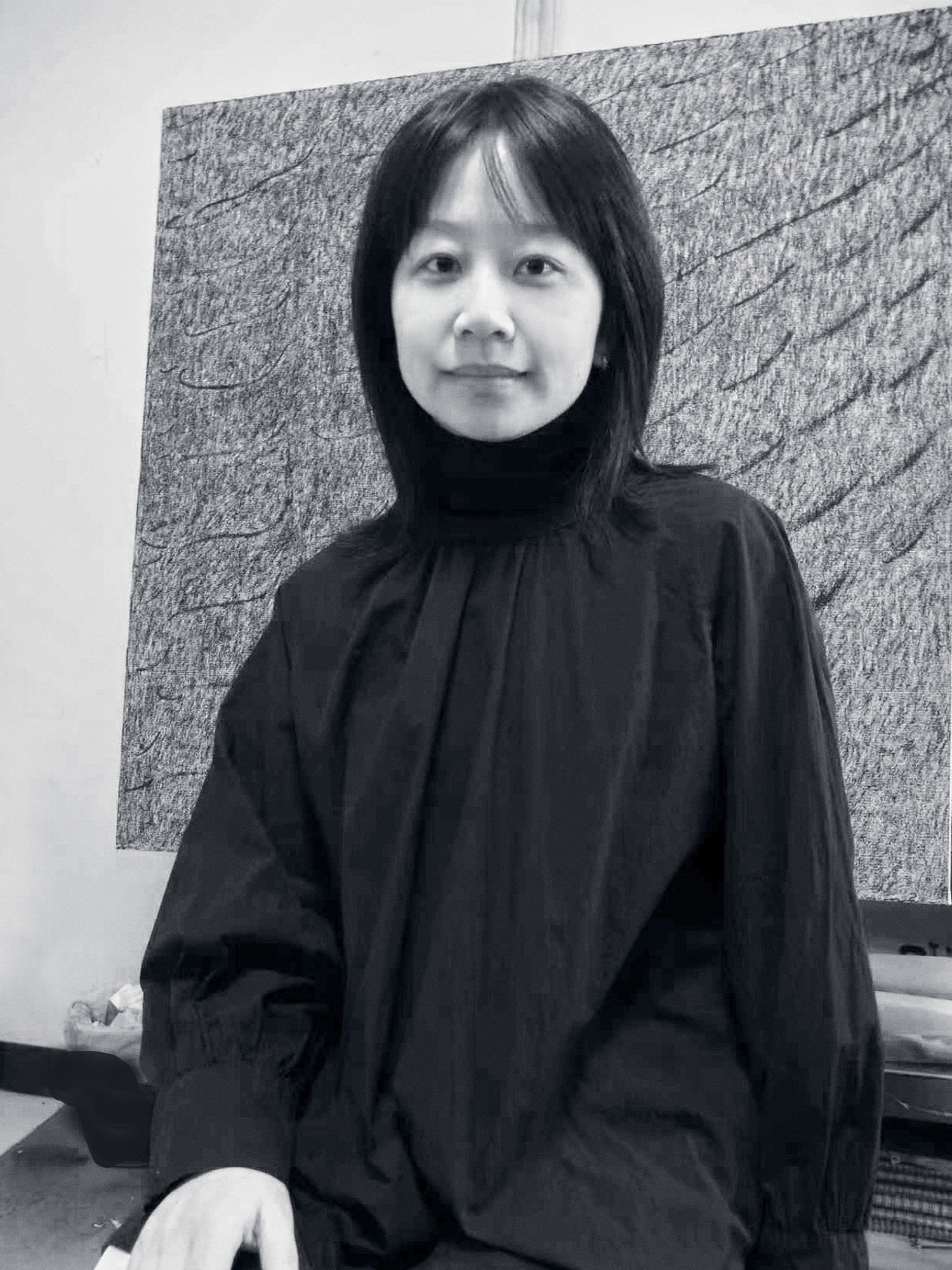
胡媛媛 Hu Yuanyuan

艺术家胡媛媛( 1996年生,2021年获中央美术学院硕士学位,现居河北),并将于2026年3月在广州为她举办首场画廊个展。

胡媛媛生于湖北荆州,这座充满历史层积与未完成感的城市,培养了她对日常事物细微变动的敏锐感知。她既凝视自身生活的“在地性”,也关切他者生存境遇中的无常。在观察、省思的过程中,她通过日记与绘画这两种并行且互文的方式,持续记录这些散落各处的痕迹与变迁。

在开启新的创作时,她常将画布或纸面涂成某种灰色。这片晦暗不明的基底,既不与参照物产生关系,也消解了即时的表达,成为了一个等待的空间。她并非追求以往抽象主义中的形式自律或情感投射,而是让对象在直觉的引导与理性的控制下逐渐“发生”。她的绘画超越了对可见世界的摹写,转向对“意义”如何被感知、建构这一过程的深刻探寻。

面对她的绘画,似乎令人联想到塞·托姆布雷(Cy Twombly)的那份手动的游移、卢奇欧·封塔纳(Lucio Fontana)划破空间的果决,乃至拉乌尔·德·凯泽(Raoul De Keyser)作品中意象的消解意味。然而,胡媛媛作品中那种冷静而专注的思辨特质,更多源于她将阅读与写作深度内化为一种视觉思维的表达:包括罗伯特·瓦尔泽(Robert Walser)的“雪中散步”、苏珊·桑塔格(Susan Sontag)的“微小的闪光”,或者格奥尔格·齐美尔(Georg Simmel)对“求定意志”与“求知意志”的分析等等。

这些文本塑造了她观看世界的方式和问题意识,使得她的绘画呈现了一种非扁平的抽象逻辑,蕴含着层叠的意义结构与可读的思维痕迹,她的绘画可被视为一种“视觉哲学”的实践。从画面的构成元素来看,胡媛媛绘画的最大特点,在于从色块中生长出如“枝桠”般细微的笔触痕迹与文字记录。所有这些都区别于西方的抽象绘画。

胡媛媛以持续而专注的耐力向“生活”学习,展现出令人吃惊的天赋。在物象的具体性与时间的流逝感之间,她捕捉那些刹那的轮廓、关系的隐喻与沉默的凝聚,让它们在经验中停留、在语言中重组。在有限条件下不断拓展对自由的表达,进而厘清认知与存在的边界。她所绘制的对象便在这种沉思与中间状态的张力中,完成了对困境的辩证。

她的作品,无论主题指向日常事物还是地缘政治,往往呈现为一种深思熟虑的模糊与悬置。然而,恰是这种拒绝简单归类的视觉状态,透视出了“陌生化”的潜能,以及它们所能激发的关于“想象”与“希望”的情感共鸣。正是在混沌里,这些“未完成”之物闪烁着神秘的光泽。

艺术家 | 胡媛媛

works

exhibitions

Long Space is hosting the first solo exhibition Chongyang: Heavy Punch, marking the first concentrated presentation of artist Luan Chongyang’s (born 1990) paintings from the past decade. The exhibition features approximately 30 works, including oil paintings on canvas, wood panels, and drawings on paper, divided into two main themes: the boxing gym and local features.

ChongYang: Heavy Punch

Long Space is hosting the first solo exhibition Chongyang: Heavy Punch, marking the first concentrated presentation of artist Luan Chongyang’s (born 1990) paintings from the past decade. The exhibition features approximately 30 works, including oil paintings on canvas, wood panels, and drawings on paper, divided into two main themes: the boxing gym and local features.

Luan Chongyang's artistic practice began with depicting familiar local spaces, such as train stations, docks, construction sites, and courtyards. The tone of the city where he lives, Zhengzhou, is reflected in the color palette of these works—gray, earthy yellow, and brown—while large areas of dry, dull green defy easy interpretation as plant life. In Central China, rows of gray urban buildings rising from the ground align with local customs and lifestyle patterns, shaping the rules that govern daily life. These internal laws are mirrored in Chongyang’s compositions, where the rectangular structure serves as the stabilizing element in the painting, and also as a metaphor for his inner home. Within this structure, the artist places various short, strip-shaped "small objects", which can be people, animals, boats, and container cars, among others. These works, representing the theme of "local features," are displayed on the third floor of Long Space.

栾重阳,《刮墙》2022,纸本综合,36×51 厘米,©栾重阳

▲栾重阳,《码头》2019,布面油画,60×80 厘米,©栾重阳

The second floor of Long Space showcases more recent works. Moving from large-scale regional rectangular formats to smaller ones representing the boxing gym, the most noticeable elements are the boxing ring, the walls, cabinets, and posters or photos on the gym's interior walls. Chongyang uses these elements to create another small world he loves, shaped by his passion for boxing. There are certainly many works about boxing in the art world, but few persons are both boxers and artists who paint boxing subjects, like Chongyang. In this series, he depicts not the intense boxing matches, but the gym itself—a familiar environment for him. In contrast to famous boxing works by American artist George Bellows (1882-1925), whose boxing scenes focus on the fights, Chongyang’s paintings of the boxing gym are intimate and approachable. Using the same method he applied to depicting regional characteristics, he arranges boxers and training equipment in small, rectangular forms within the frame.

▲栾重阳,《拳击》,2025,布面油画,40 x 60 厘米,©栾重阳

▲栾重阳,《拳馆》,2025,板上油画,50 x 60 厘米,©栾重阳

▲栾重阳,《无题》,2023,纸本综合材料,30 x 40 厘米装裱尺寸,©栾重阳

重阳以前的访谈中,曾提及他的艺术受贺兰山岩画的影响,这多多少少反映在他画作的造型上。他的平面化构图,人物和物件被勾勒在其中。就犹如先人把动物或人形刻在巨大山体的岩石中,在大自然中那些岩画图形是如此的渺小,但刻线简练和形象直插人心。这种对客体的感悟渐渐内化融入重阳的画面,而不是生硬地照搬岩画的风格。他也曾喜爱西班牙画家安东尼·塔皮埃斯(Antoni Tàpies, 1923-2012)和法国画家亨利·卢梭(Henri Julien Félix Rousseau、1844-1910)的作品。以上两位画家生于不同的时代,画风也完全不同,但他们在画面都倾向于平面化的处理,重阳在此得到了启发。若不是他提及影响他绘画的因素,我们很难在他的作品中找到这些前人的痕迹。这种对认识的内化方式,造就了重阳驾驭画面轻松自如的能力,并形成了他作品的结构和风格。

▲ 栾重阳,《练拳少年》,2023,纸本综合材料,36 x 51 厘米,©栾重阳

Heavy Punchis merely the title of this exhibition, which does not reflect Chongyang's usual approach to people or his paintings. However, in the realms of art or boxing, Chongyang faces challenges head-on and delivers a strong punch when necessary.

Exhibition|Guangzhou LongSpace

2025.10.11-12.17

ChongYang: Heavy Punch

Long Space is hosting the first solo exhibition Chongyang: Heavy Punch, marking the first concentrated presentation of artist Luan Chongyang’s (born 1990) paintings from the past decade. The exhibition features approximately 30 works, including oil paintings on canvas, wood panels, and drawings on paper, divided into two main themes: the boxing gym and local features.

Luan Chongyang's artistic practice began with depicting familiar local spaces, such as train stations, docks, construction sites, and courtyards. The tone of the city where he lives, Zhengzhou, is reflected in the color palette of these works—gray, earthy yellow, and brown—while large areas of dry, dull green defy easy interpretation as plant life. In Central China, rows of gray urban buildings rising from the ground align with local customs and lifestyle patterns, shaping the rules that govern daily life. These internal laws are mirrored in Chongyang’s compositions, where the rectangular structure serves as the stabilizing element in the painting, and also as a metaphor for his inner home. Within this structure, the artist places various short, strip-shaped "small objects", which can be people, animals, boats, and container cars, among others. These works, representing the theme of "local features," are displayed on the third floor of Long Space.

栾重阳,《刮墙》2022,纸本综合,36×51 厘米,©栾重阳

▲栾重阳,《码头》2019,布面油画,60×80 厘米,©栾重阳

The second floor of Long Space showcases more recent works. Moving from large-scale regional rectangular formats to smaller ones representing the boxing gym, the most noticeable elements are the boxing ring, the walls, cabinets, and posters or photos on the gym's interior walls. Chongyang uses these elements to create another small world he loves, shaped by his passion for boxing. There are certainly many works about boxing in the art world, but few persons are both boxers and artists who paint boxing subjects, like Chongyang. In this series, he depicts not the intense boxing matches, but the gym itself—a familiar environment for him. In contrast to famous boxing works by American artist George Bellows (1882-1925), whose boxing scenes focus on the fights, Chongyang’s paintings of the boxing gym are intimate and approachable. Using the same method he applied to depicting regional characteristics, he arranges boxers and training equipment in small, rectangular forms within the frame.

▲栾重阳,《拳击》,2025,布面油画,40 x 60 厘米,©栾重阳

▲栾重阳,《拳馆》,2025,板上油画,50 x 60 厘米,©栾重阳

▲栾重阳,《无题》,2023,纸本综合材料,30 x 40 厘米装裱尺寸,©栾重阳

重阳以前的访谈中,曾提及他的艺术受贺兰山岩画的影响,这多多少少反映在他画作的造型上。他的平面化构图,人物和物件被勾勒在其中。就犹如先人把动物或人形刻在巨大山体的岩石中,在大自然中那些岩画图形是如此的渺小,但刻线简练和形象直插人心。这种对客体的感悟渐渐内化融入重阳的画面,而不是生硬地照搬岩画的风格。他也曾喜爱西班牙画家安东尼·塔皮埃斯(Antoni Tàpies, 1923-2012)和法国画家亨利·卢梭(Henri Julien Félix Rousseau、1844-1910)的作品。以上两位画家生于不同的时代,画风也完全不同,但他们在画面都倾向于平面化的处理,重阳在此得到了启发。若不是他提及影响他绘画的因素,我们很难在他的作品中找到这些前人的痕迹。这种对认识的内化方式,造就了重阳驾驭画面轻松自如的能力,并形成了他作品的结构和风格。

▲ 栾重阳,《练拳少年》,2023,纸本综合材料,36 x 51 厘米,©栾重阳

Heavy Punchis merely the title of this exhibition, which does not reflect Chongyang's usual approach to people or his paintings. However, in the realms of art or boxing, Chongyang faces challenges head-on and delivers a strong punch when necessary.

Exhibition|Guangzhou LongSpace

2025.10.11-12.17

art fairs

news

videos