即兴音乐,绘画,装置等多媒介艺术家
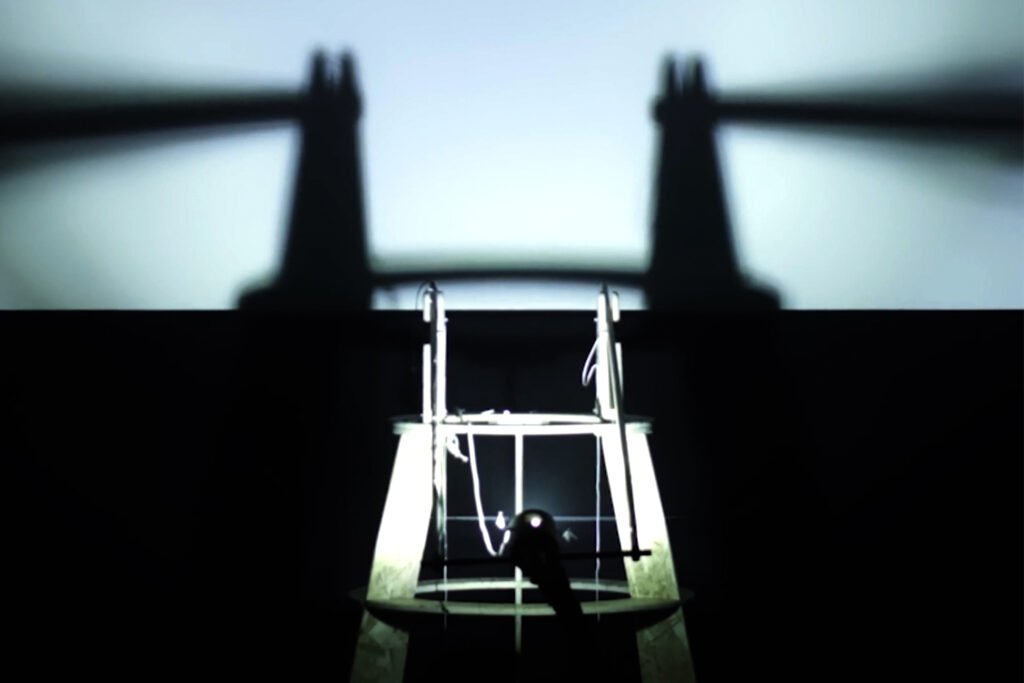
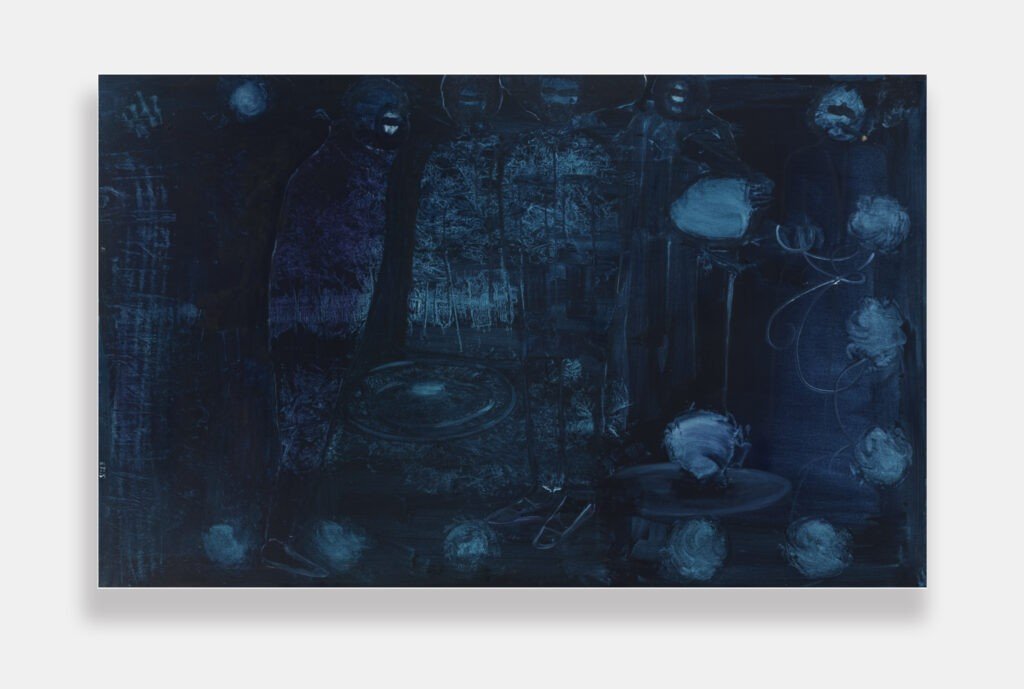
安德鲁·皮埃尔·哈特(Andrew Pierre Hart)出生于英国伦敦,现生活和工作于伦敦。他早期以唱片制作人身份进入艺术领域,1994 年创立个人唱片厂牌 deepart,这一阶段的音乐实践早于他作为画家的发展,并为其后在视觉与声音之间的跨界探索奠定基础。2014 至 2017 年间,他在切尔西艺术学院攻读纯艺术学士学位,自此其创作始终致力于在音乐与绘画两种媒介之间建立联系,并以并行的方式加以探索;在 2017 至 2019 年于皇家艺术学院完成绘画硕士课程期间,这一跨媒介方向进一步系统化,并在 2019 年硕士毕业展中通过五幅悬挂于“声音座椅”前方的“神秘蓝色”绘画及其对应配乐,集中呈现色彩与音调之间的可能关系。作为一位跨学科艺术家,他以绘画为基点,将声音、装置和表演纳入实践之中,同时活跃于教学与专业领域:现任皇家艺术学院绘画硕士课程副教授及客座讲师,并于 2019 至 2020 年完成“艺术、设计与传播教学实践”的研究生课程。除创作与教学之外,他亦参与当代艺术生态的制度建设与评议工作,担任 2025/2026 年度国际策展论坛咨询委员会委员及 2025 年度 Freelands 绘画奖评审团成员。
哈特的作品以“声音秩序”理论探索视、听之间的关联。他认为,世间万物皆有其独特的节奏和声响且能转化为视觉艺术的语言。在绘画的基础上,哈特展开了不同媒介的探索和实践,包括表演、影像、声音、装置、雕塑、摄影等。他以过人的活力表现出现代生活中声音的混杂性与多元性,以此探索即兴创作和集体记忆的主题。在旅行过程中,他以声音作为切入点,探索地方音景和文化并作出回应。这一跨模块的联动,是他的思考方式和生活方式。
在创作方法上,哈特尤其关注“即兴生成”的时间性。他惯常从身体感知与脚步节奏出发,将自己在城市漫游、夜间驾车、乘车穿行或在社区停留的经验,转译为画布上的色块、线条与结构节奏。例如在《广州夜游》中,以近乎乐谱般的线性结构与节奏感处理灯光、建筑与道路,将城市夜行经验转化为可被“阅读”的声音图像。他的绘画往往与录音、现场演奏、口述及现场表演并行展开:画布不只是图像呈现的终点,而是与声音装置、现场表演、墙绘与短片相互勾连的节点。在布里克斯顿、“Diaspora Pavilion 2”和加纳、拉各斯等场域,他通过把理发店的嗡嗡声、流行歌曲的旋律、街头交谈与特定社区的社会节奏嵌入展览结构,将作品塑造成一个可被进入、可被环绕的“声音房间”。至此,观众在其中并非只是与其作品进行视觉触探,而是被拉入通感的世界,进行新一层的声道探索。
这种理解延伸到他在广州的创作中:他把广州视为一套开放的节奏谱系,从街市的喧闹、黄昏洗碗的水声,到驶过高架的车流声、麻将声与街头小店里反复播放的歌曲,将其既作为“本地事物”(local things),又作为与加勒比社区、伦敦南部等不同地理经验之间的迂回联结。画面中,岭南生活样态与加勒比文化记忆被并置在同一视觉节奏里——例如以“洗碗”动作连接广州餐前清洁习惯与加勒比地区的餐前清洁传统,使看似遥远的地方文化通过动作与节奏发生共振。对他而言,文化并非被固定在某个地理坐标之中,而是像旋律一样“绕着地球循环”,在不同城市与社区间不断重现、变奏与相遇。
因此,哈特的艺术实践以绘画为基础,又始终保持跨学科张力,核心围绕声音与绘画的共生关系展开。他的创作聚焦于即兴与自发生成过程的节奏研究,通过声音、视频、表演、现成品、图像、语言、摄影与装置等多重媒介搭建出一个跨模态的系统:绘画中的线条与色块对应节拍、停顿与呼吸,声音作品则反向吸收绘画中的结构与层次,形成一种在视觉与听觉之间来回震荡的波形场。在这一过程中,他将绘画与声音之间的跨模态性视作一种重构语言与观念生成方式的契机。通过把节奏、即兴与共鸣引入作品的核心,他让实践以“无限回应”的方式向外延展:每一次演出、录音、展出与墙绘都成为对前一次即兴的再即兴。
An interdisciplinary artist working with improvisational music, painting and installation
Andrew Pierre Hart was born in London, UK, and is currently based there. He first entered the field as a record producer, founding his label deepart in 1994; this early engagement with music predates his development as a painter and laid the groundwork for his subsequent cross-disciplinary exploration between sound and image. From 2014 to 2017, he studied for a BA in Fine Art at Chelsea College of Arts, during which time his work became consistently focused on building connections between music and painting and exploring the two media in parallel. This cross-media orientation was further systematized during his MA in Painting at the Royal College of Art (2017–2019), and in his 2019 degree show he presented five “mysterious blue” paintings hung in front of “sound seats,” accompanied by corresponding soundtracks, as a concentrated investigation into the relationship between colour and tone. As an interdisciplinary artist, Hart takes painting as a base while incorporating sound, installation and performance into his practice, and he is also active in teaching and professional fields: he is Associate Professor on the MA Painting programme at the Royal College of Art, where he also teaches as a visiting lecturer, and in 2019–2020 he completed a postgraduate certificate in Art, Design and Communication in Higher Education. Beyond his own practice and pedagogy, he contributes to the wider contemporary art ecology through advisory and evaluative roles, serving as a member of the International Curators Forum advisory board for 2025/2026 and as a juror for the 2025 Freelands Painting Prize.
Hart’s work is grounded in his notion of a “sonic order,” through which he explores the relationship between seeing and hearing. He believes that everything in the world carries its own distinctive rhythm and sound, and that these can be translated into the language of visual art. Building on painting as a core medium, Hart extends his practice across performance, moving image, sound, installation, sculpture and photography. With a remarkable sense of energy, he gives form to the mixed and multiple layers of sound in contemporary life, using them as a way to probe themes of improvisation and collective memory. When travelling, he takes sound as his entry point, listening to local soundscapes and cultures and responding to them; this continual cross‑linking between different “modules” of experience is both his way of thinking and his way of living.
Methodologically, Hart is particularly attentive to the temporality of “improvised emergence.” He often starts from bodily perception and the rhythm of his own footsteps, translating experiences of wandering through the city, driving at night, riding in a car or lingering in neighbourhoods into blocks of colour, lines and structural rhythms on the canvas. In works such as Night drive G.Z., for instance, he treats lights, buildings and roads through a near‑musical linear structure and sense of tempo, turning the experience of moving through the city at night into a “sonic image” that can be read. His paintings frequently unfold in parallel with recording, live performance, spoken word and on‑site actions: the canvas is not simply a final surface for images, but a node that connects to sound installations, live sets, wall drawings and short videos. In Brixton, at “Diaspora Pavilion 2,” and in contexts such as Ghana and Lagos, he incorporates barbershop buzz, the melodies of popular songs, street conversations and the social rhythms of specific communities into the exhibition architecture, shaping the work into a “room of sound” that can be entered and encircled. Viewers are thus no longer merely probing the work visually, but are drawn into a synaesthetic field, opening up another layer of sonic exploration.
This understanding extends directly into his work in Guangzhou. Hart approaches the city as an open score of rhythms, ranging from the clamour of markets and the sound of dishes being washed at dusk, to the rush of traffic on elevated roads, the clack of mahjong tiles and the songs looped in small street‑side shops. He treats these simultaneously as “local things” and as oblique connectors to other geographies such as Caribbean communities or the neighbourhoods of South London. In his images, Cantonese everyday life and Caribbean cultural memory are placed within the same visual rhythm. For example, the act of washing dishes links pre‑meal cleaning practices in Guangzhou with analogous customs in the Caribbean, allowing cultures that seem far apart to resonate with one another through gesture and tempo. For Hart, culture is not fixed to a single geographical co‑ordinate, but is more like a melody “circling the globe,” continually reappearing, modulating and meeting itself anew across different cities and communities.
Hart’s artistic practice is therefore rooted in painting, yet maintains a constant interdisciplinary tension, with a core focus on the symbiotic relationship between sound and painting. His work centres on the rhythmic study of improvisation and spontaneous generation, constructing a cross‑modal system by way of sound, video, performance, found objects, images, language, photography and installation. Lines and colour fields in the paintings correspond to beats, pauses and breaths, while the sound works in turn absorb compositional structures and layering strategies from the paintings, creating a waveform field that oscillates between seeing and hearing. In this process, he treats the cross‑modality between painting and sound as an opportunity to reconfigure how language and concepts are produced. By drawing rhythm, improvisation and resonance into the very core of the work, he allows his practice to expand through an “infinite response”: each performance, recording, exhibition or wall painting becomes a re‑improvisation of what came before, a fresh remix and re‑sampling of existing images and sounds.