所有展览

Long Space is pleased to announce that Hu Yuanyuan's first solo exhibition, "Irrelevant Events," will open on March 6, 2026. This exhibition will feature 15 oil paintings on canvas recently created by the artist and 33 paper paintings from her past works. 

Long Space is pleased to announce that Hu Yuanyuan's first solo exhibition, "Irrelevant Events," will open on March 6, 2026. This exhibition will feature 15 oil paintings on canvas recently created by the artist and 33 paper paintings from her past works. 

胡媛媛的绘画,记录的是一种“遭遇”。这遭遇是面向人群、生活所形成的意识流。她的敏感与关于视角的转换总能将那些日常事物与某种动机产生连接。因此,她的绘画并非现实主义的客观描摹,而是刻画与对象的遭遇。物、时间以及感觉都失去了其稳定、固定的指称性,没有必要的解释,但同时却产生了想象的条件。由此成为一种书写,一种在坚决的消逝与强烈的存在之间的“感觉的逻辑”。

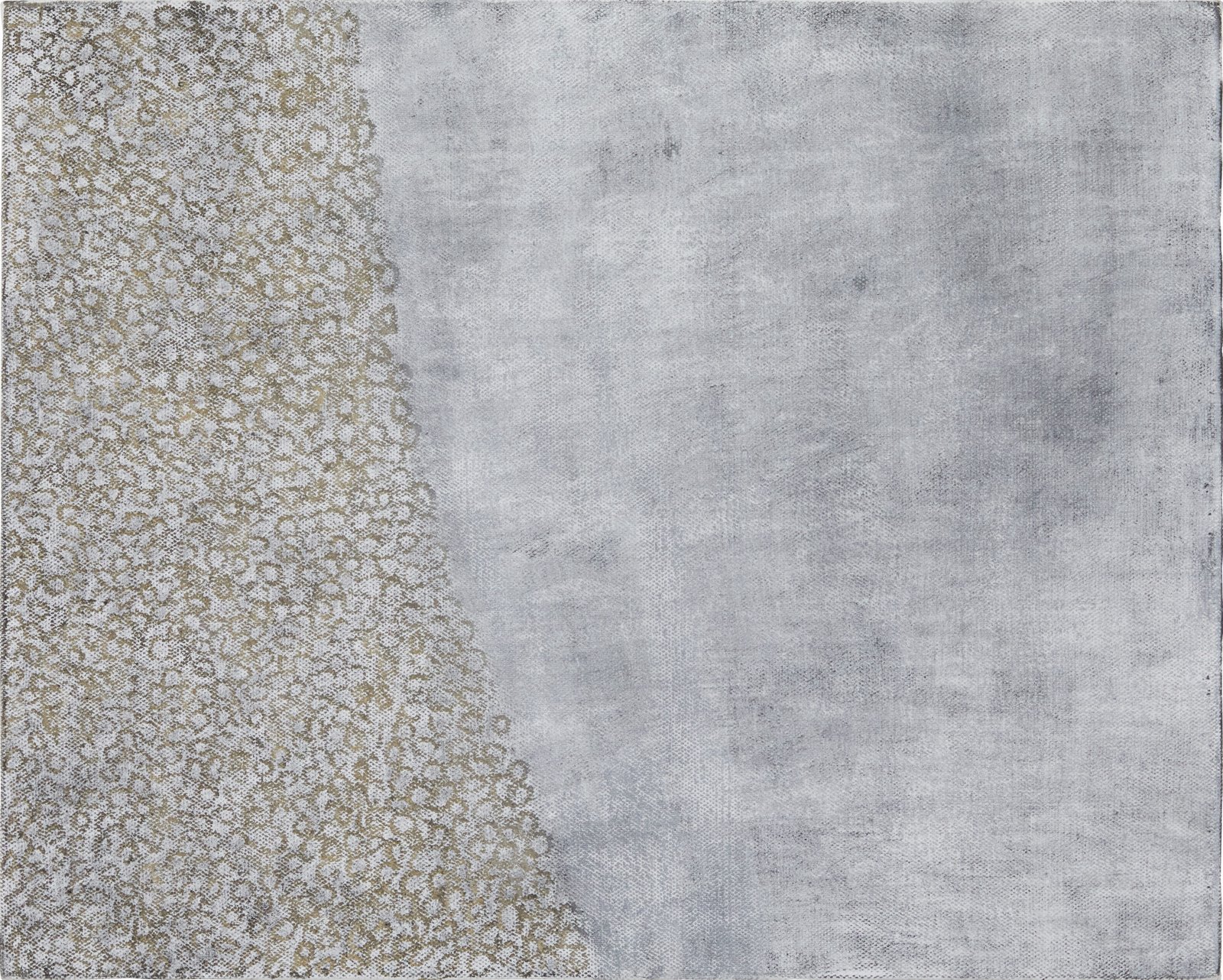
▲《凛冬将至》(Winter is coming),100×100cm,布面综合,2026,©艺术家及弄空间

In Hu Yuanyuan's works, the subjective vision is actively suppressed. The remaining texture, the metaphor of things, and the expansion of traces make the picture appear silent and vast, as if filtered through half - closed eyes. This inevitably reminds people of Martin Jay's famous concept of "Downcast Eyes". Allen Ginsberg once demonstrated it like this: "Lower your line of sight to about 6 feet (about 1.83 meters) in front of you and reduce its focus. He taught me that this kind of staring allows people to engage in meditative contemplation rather than analytical examination of the external reality. It avoids the distractions brought by daily visual experience and enables people to better understand the unity between the internal and the external. It does not anxiously look forward to an uncertain future but focuses on the fullness of the present. Moreover, it can eliminate the potential dominance, penetration, alienation, objectification, and even violence of the stare..." 

Hu Yuanyuan's paintings with a "low - light" effect imply the same perspective. They create a blurred zone between the internal and the external, the subject and the object, the recognizable and the disintegrated. In this zone, there lies the wakeful sleep, the silent thunder, and the hidden manifestation. She grew up in Jingzhou, Hubei. The historical traces and the growth of the land have made her feel the solemnity and grandeur of a "place" and cultivated her sensitivity and simple perception of things in daily life, such as angles, hardness, marks, and shapes. Her continuous research and writing in philosophy provide the motivation for continuous discovery in daily life. She even directly extends her writing to the painting, making it part of the work. The sketches in the exhibition will allow the audience to see her efforts in capturing the characteristics of the objects. 

In addition to paintings of daily objects or scenery, the exhibited works also include those painted based on news screenshots of major events around the world. Although the titles of the works are very specific (such as "Scenes of the Israeli Army's Recent Attacks on Lebanon"), the pictures have the same sense of abstraction: the map of the earth is like a fragile and loose wall, the sky illuminated by the fire turns into the setting of a theatrical stage, and the stare at the war machine reveals the cruelty of mediation and restraint. The "absence" of people does not mean erasing the suffering but leads to a kind of contemplative mourning. Hu Yuanyuan has re - configured the order of the visible and the sayable about war in her paintings. By preserving the sky, the earth, and some continuously existing state structures, as well as the overall atmosphere of war or catastrophe, she tries to approach what  Jean - François Lyotard calls "the unpresentable," maintaining respect for the events and the solemnity of commemoration in a recordable and readable painting form. 

Hu Yuanyuan creates a parallel world with her paintings. In this world, all boundaries disappear. Emotions begin to well up on the surface of things and gradually seep into their interior. In such a silent and focused encounter, the world and people achieve a brief reconciliation, allowing them to settle with each other.

▲《以军近日袭击黎巴嫩画面》(The recent attack by the Israeli army on Lebanon),40×50cm,布面综合,2025,©艺术家及弄空间

▲《辐射》(Radiation),70×100cm,布面综合,2026,©艺术家及弄空间

Exhibition|Guangzhou LongSpace

2026.3.7-4.19
Long Space is pleased to announce that Hu Yuanyuan's first solo exhibition, "Irrelevant Events," will open on March 6, 2026. This exhibition will feature 15 oil paintings on canvas recently created by the artist and 33 paper paintings from her past works. 

胡媛媛的绘画,记录的是一种“遭遇”。这遭遇是面向人群、生活所形成的意识流。她的敏感与关于视角的转换总能将那些日常事物与某种动机产生连接。因此,她的绘画并非现实主义的客观描摹,而是刻画与对象的遭遇。物、时间以及感觉都失去了其稳定、固定的指称性,没有必要的解释,但同时却产生了想象的条件。由此成为一种书写,一种在坚决的消逝与强烈的存在之间的“感觉的逻辑”。

▲《凛冬将至》(Winter is coming),100×100cm,布面综合,2026,©艺术家及弄空间

In Hu Yuanyuan's works, the subjective vision is actively suppressed. The remaining texture, the metaphor of things, and the expansion of traces make the picture appear silent and vast, as if filtered through half - closed eyes. This inevitably reminds people of Martin Jay's famous concept of "Downcast Eyes". Allen Ginsberg once demonstrated it like this: "Lower your line of sight to about 6 feet (about 1.83 meters) in front of you and reduce its focus. He taught me that this kind of staring allows people to engage in meditative contemplation rather than analytical examination of the external reality. It avoids the distractions brought by daily visual experience and enables people to better understand the unity between the internal and the external. It does not anxiously look forward to an uncertain future but focuses on the fullness of the present. Moreover, it can eliminate the potential dominance, penetration, alienation, objectification, and even violence of the stare..." 

Hu Yuanyuan's paintings with a "low - light" effect imply the same perspective. They create a blurred zone between the internal and the external, the subject and the object, the recognizable and the disintegrated. In this zone, there lies the wakeful sleep, the silent thunder, and the hidden manifestation. She grew up in Jingzhou, Hubei. The historical traces and the growth of the land have made her feel the solemnity and grandeur of a "place" and cultivated her sensitivity and simple perception of things in daily life, such as angles, hardness, marks, and shapes. Her continuous research and writing in philosophy provide the motivation for continuous discovery in daily life. She even directly extends her writing to the painting, making it part of the work. The sketches in the exhibition will allow the audience to see her efforts in capturing the characteristics of the objects. 

In addition to paintings of daily objects or scenery, the exhibited works also include those painted based on news screenshots of major events around the world. Although the titles of the works are very specific (such as "Scenes of the Israeli Army's Recent Attacks on Lebanon"), the pictures have the same sense of abstraction: the map of the earth is like a fragile and loose wall, the sky illuminated by the fire turns into the setting of a theatrical stage, and the stare at the war machine reveals the cruelty of mediation and restraint. The "absence" of people does not mean erasing the suffering but leads to a kind of contemplative mourning. Hu Yuanyuan has re - configured the order of the visible and the sayable about war in her paintings. By preserving the sky, the earth, and some continuously existing state structures, as well as the overall atmosphere of war or catastrophe, she tries to approach what  Jean - François Lyotard calls "the unpresentable," maintaining respect for the events and the solemnity of commemoration in a recordable and readable painting form. 

Hu Yuanyuan creates a parallel world with her paintings. In this world, all boundaries disappear. Emotions begin to well up on the surface of things and gradually seep into their interior. In such a silent and focused encounter, the world and people achieve a brief reconciliation, allowing them to settle with each other.

▲《以军近日袭击黎巴嫩画面》(The recent attack by the Israeli army on Lebanon),40×50cm,布面综合,2025,©艺术家及弄空间

▲《辐射》(Radiation),70×100cm,布面综合,2026,©艺术家及弄空间

Exhibition|Guangzhou LongSpace

2026.3.7-4.19

Long Space is hosting the first solo exhibition Chongyang: Heavy Punch, marking the first concentrated presentation of artist Luan Chongyang’s (born 1990) paintings from the past decade. The exhibition features approximately 30 works, including oil paintings on canvas, wood panels, and drawings on paper, divided into two main themes: the boxing gym and local features.

ChongYang: Heavy Punch

Long Space is hosting the first solo exhibition Chongyang: Heavy Punch, marking the first concentrated presentation of artist Luan Chongyang’s (born 1990) paintings from the past decade. The exhibition features approximately 30 works, including oil paintings on canvas, wood panels, and drawings on paper, divided into two main themes: the boxing gym and local features.

Luan Chongyang's artistic practice began with depicting familiar local spaces, such as train stations, docks, construction sites, and courtyards. The tone of the city where he lives, Zhengzhou, is reflected in the color palette of these works—gray, earthy yellow, and brown—while large areas of dry, dull green defy easy interpretation as plant life. In Central China, rows of gray urban buildings rising from the ground align with local customs and lifestyle patterns, shaping the rules that govern daily life. These internal laws are mirrored in Chongyang’s compositions, where the rectangular structure serves as the stabilizing element in the painting, and also as a metaphor for his inner home. Within this structure, the artist places various short, strip-shaped "small objects", which can be people, animals, boats, and container cars, among others. These works, representing the theme of "local features," are displayed on the third floor of Long Space.

栾重阳,《刮墙》2022,纸本综合,36×51 厘米,©栾重阳

▲栾重阳,《码头》2019,布面油画,60×80 厘米,©栾重阳

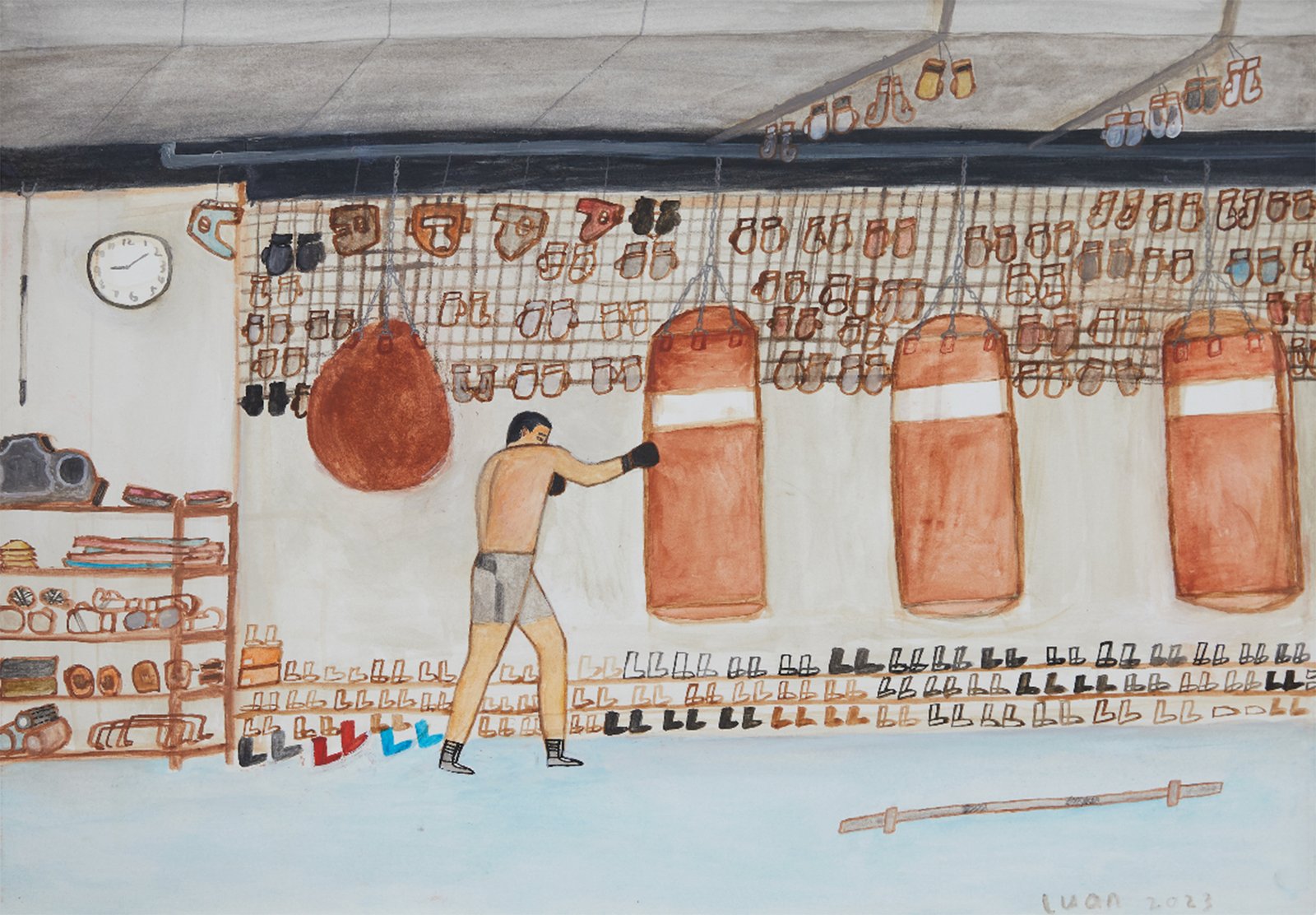
The second floor of Long Space showcases more recent works. Moving from large-scale regional rectangular formats to smaller ones representing the boxing gym, the most noticeable elements are the boxing ring, the walls, cabinets, and posters or photos on the gym's interior walls. Chongyang uses these elements to create another small world he loves, shaped by his passion for boxing. There are certainly many works about boxing in the art world, but few persons are both boxers and artists who paint boxing subjects, like Chongyang. In this series, he depicts not the intense boxing matches, but the gym itself—a familiar environment for him. In contrast to famous boxing works by American artist George Bellows (1882-1925), whose boxing scenes focus on the fights, Chongyang’s paintings of the boxing gym are intimate and approachable. Using the same method he applied to depicting regional characteristics, he arranges boxers and training equipment in small, rectangular forms within the frame.

▲栾重阳,《拳击》,2025,布面油画,40 x 60 厘米,©栾重阳

▲栾重阳,《拳馆》,2025,板上油画,50 x 60 厘米,©栾重阳

▲栾重阳,《无题》,2023,纸本综合材料,30 x 40 厘米装裱尺寸,©栾重阳

重阳以前的访谈中,曾提及他的艺术受贺兰山岩画的影响,这多多少少反映在他画作的造型上。他的平面化构图,人物和物件被勾勒在其中。就犹如先人把动物或人形刻在巨大山体的岩石中,在大自然中那些岩画图形是如此的渺小,但刻线简练和形象直插人心。这种对客体的感悟渐渐内化融入重阳的画面,而不是生硬地照搬岩画的风格。他也曾喜爱西班牙画家安东尼·塔皮埃斯(Antoni Tàpies, 1923-2012)和法国画家亨利·卢梭(Henri Julien Félix Rousseau、1844-1910)的作品。以上两位画家生于不同的时代,画风也完全不同,但他们在画面都倾向于平面化的处理,重阳在此得到了启发。若不是他提及影响他绘画的因素,我们很难在他的作品中找到这些前人的痕迹。这种对认识的内化方式,造就了重阳驾驭画面轻松自如的能力,并形成了他作品的结构和风格。

▲ 栾重阳,《练拳少年》,2023,纸本综合材料,36 x 51 厘米,©栾重阳

Heavy Punchis merely the title of this exhibition, which does not reflect Chongyang's usual approach to people or his paintings. However, in the realms of art or boxing, Chongyang faces challenges head-on and delivers a strong punch when necessary.

Exhibition|Guangzhou LongSpace

2025.10.11-12.17

ChongYang: Heavy Punch

Long Space is hosting the first solo exhibition Chongyang: Heavy Punch, marking the first concentrated presentation of artist Luan Chongyang’s (born 1990) paintings from the past decade. The exhibition features approximately 30 works, including oil paintings on canvas, wood panels, and drawings on paper, divided into two main themes: the boxing gym and local features.

Luan Chongyang's artistic practice began with depicting familiar local spaces, such as train stations, docks, construction sites, and courtyards. The tone of the city where he lives, Zhengzhou, is reflected in the color palette of these works—gray, earthy yellow, and brown—while large areas of dry, dull green defy easy interpretation as plant life. In Central China, rows of gray urban buildings rising from the ground align with local customs and lifestyle patterns, shaping the rules that govern daily life. These internal laws are mirrored in Chongyang’s compositions, where the rectangular structure serves as the stabilizing element in the painting, and also as a metaphor for his inner home. Within this structure, the artist places various short, strip-shaped "small objects", which can be people, animals, boats, and container cars, among others. These works, representing the theme of "local features," are displayed on the third floor of Long Space.

栾重阳,《刮墙》2022,纸本综合,36×51 厘米,©栾重阳

▲栾重阳,《码头》2019,布面油画,60×80 厘米,©栾重阳

The second floor of Long Space showcases more recent works. Moving from large-scale regional rectangular formats to smaller ones representing the boxing gym, the most noticeable elements are the boxing ring, the walls, cabinets, and posters or photos on the gym's interior walls. Chongyang uses these elements to create another small world he loves, shaped by his passion for boxing. There are certainly many works about boxing in the art world, but few persons are both boxers and artists who paint boxing subjects, like Chongyang. In this series, he depicts not the intense boxing matches, but the gym itself—a familiar environment for him. In contrast to famous boxing works by American artist George Bellows (1882-1925), whose boxing scenes focus on the fights, Chongyang’s paintings of the boxing gym are intimate and approachable. Using the same method he applied to depicting regional characteristics, he arranges boxers and training equipment in small, rectangular forms within the frame.

▲栾重阳,《拳击》,2025,布面油画,40 x 60 厘米,©栾重阳

▲栾重阳,《拳馆》,2025,板上油画,50 x 60 厘米,©栾重阳

▲栾重阳,《无题》,2023,纸本综合材料,30 x 40 厘米装裱尺寸,©栾重阳

重阳以前的访谈中,曾提及他的艺术受贺兰山岩画的影响,这多多少少反映在他画作的造型上。他的平面化构图,人物和物件被勾勒在其中。就犹如先人把动物或人形刻在巨大山体的岩石中,在大自然中那些岩画图形是如此的渺小,但刻线简练和形象直插人心。这种对客体的感悟渐渐内化融入重阳的画面,而不是生硬地照搬岩画的风格。他也曾喜爱西班牙画家安东尼·塔皮埃斯(Antoni Tàpies, 1923-2012)和法国画家亨利·卢梭(Henri Julien Félix Rousseau、1844-1910)的作品。以上两位画家生于不同的时代,画风也完全不同,但他们在画面都倾向于平面化的处理,重阳在此得到了启发。若不是他提及影响他绘画的因素,我们很难在他的作品中找到这些前人的痕迹。这种对认识的内化方式,造就了重阳驾驭画面轻松自如的能力,并形成了他作品的结构和风格。

▲ 栾重阳,《练拳少年》,2023,纸本综合材料,36 x 51 厘米,©栾重阳

Heavy Punchis merely the title of this exhibition, which does not reflect Chongyang's usual approach to people or his paintings. However, in the realms of art or boxing, Chongyang faces challenges head-on and delivers a strong punch when necessary.

Exhibition|Guangzhou LongSpace

2025.10.11-12.17

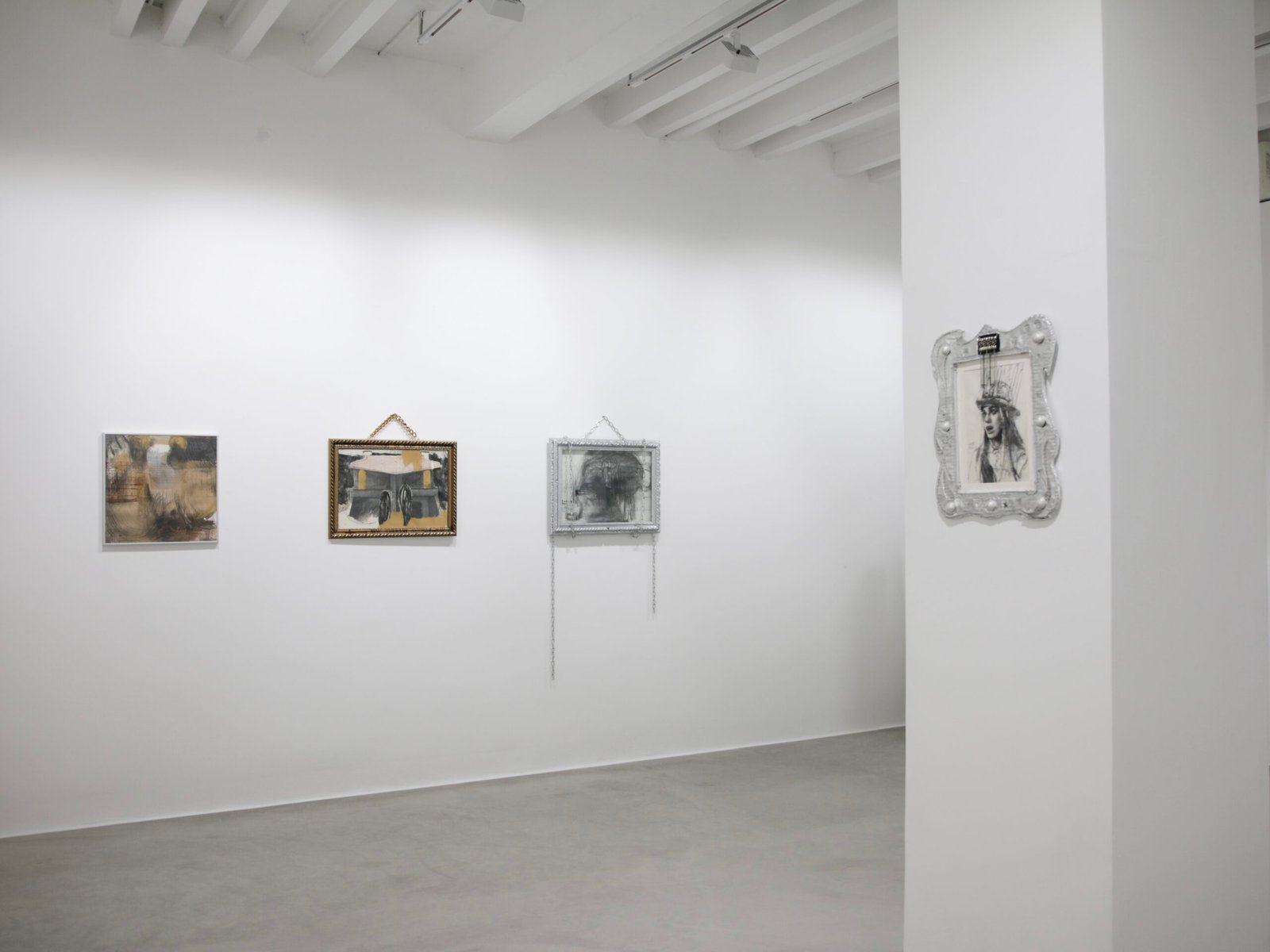
This exhibition marks the first showcase at "Long Space." Much like those great realist painters who began their masterpieces by first exploring compositions or techniques on paper, "Long Space" is also grounded in reality. It begins with drawings on paper, undergoing a process of creation that leads into the future. 

Please Come Up To 2F, Then 3F——Paper on Grand Display!

Walking through the long corridor on the second floor of the Metropolitan Museum of Art, the charcoal drawings lining the walls are often given just a passing glance. Upon spotting a familiar style from afar, I rush over to see if it is indeed the strokes of a master I was once captivated by. The drawings I can immediately identify remain those by Vincent van Gogh. Despite their seemingly amateurish quality, his charcoal sketches made of short, twisted, and jerky strokes retain a strangely consistent energy. What surprised and amazed me most was the Jacques-Louis David sketch exhibition held at the museum a few years ago. I was stunned that he was such an incredibly skilled sketch artist. The grandiose oil paintings he’s known for overshadow his unique prowess in drawing. To preserve that rare viewing experience, I made an exception and purchased the exhibition catalog. Now, looking at the printed version of his sketches on glossy paper, all that remains is a sense of well-structured steadiness. This paper is not that same paper.

Still in New York: ever since many galleries moved out of Soho, I hadn’t visited the small but renowned "Drawing Center" in years. It is a space solely dedicated to exhibiting works on paper. Last year, I wandered into this museum by chance and noticed how much the space had expanded. Finally, the paper-based works of contemporary artists are being presented prominently and proudly. Here, they feel at home.

After returning to Guangzhou, I curated this exhibition at "Long Space,”not with the intention to replicate "The Drawing Center" model. The tireless task of researching and exhibiting specific art forms should be left to the dedicated visionaries at museums and galleries. Inspired by the artistic practices of a few artist friends in Guangzhou, I embarked on a quest to seek out drawings on paper. I visited artists in several major cities across China, and they were all remarkably talented, each with their own distinct styles. Half of the artists I selected were previously unknown to me. During visits to their homes or studios, I found myself deeply moved by their work and quickly selected the pieces to be exhibited. Some of these artists are well established, while another only graduated from an art academy this year. Hopefully, our visitors will not attempt to discern the artist’s age through their artwork, but rather feel—as I did—the contemporary spirit, the freedom, and ease in each creation. Of course, upon understanding the scope of the age gap between our featured artists, one might marvel: geniuses still walk among us. 

This exhibition marks the first showcase at "Long Space." Much like those great realist painters who began their masterpieces by first exploring compositions or techniques on paper, "Long Space" is also grounded in reality. It begins with drawings on paper, undergoing a process of creation that leads into the future. 

 ——Lin Yilin     

▲ 王子芸,《无题(咚咚锵)》的局部,2020,纸本水彩、铅笔,39 x 28 厘米,图片:艺术家惠允       
此次展览中呈现的作品来自于王子芸在2020年创作的一系列自反式的漫画,其中包含了她对自己工作和生活的揶揄。在这些白日梦和真实事件混杂的场景里,记录了尴尬和焦虑,也有和假想的「心灵导师」的虚构对话。    

王子芸,1986年出生于江苏南京,毕业于中国美术学院,现居广州。

雷鸣,[独角*兽]汉化版(28)之局部,2025,漫画纸、网点贴纸,25.7×36.4 CM,图片:艺术家惠允
▲ 雷鸣,[独角*兽]汉化版(28)之局部,2025,漫画纸、网点贴纸,25.7×36.4 CM,图片:艺术家惠允 
这次展览作品雷鸣绘制了没有主体的漫画,呈现着咸湿的泪,涔涔的汗,身体运动、战栗所留下的痕迹,没有文字的对话框以及一系列拟声词和语气词。在消除了所有“实词”,剥离了叙事之后,漫画呈现出一种抽象性,它们由一系列的图标、文字构成,形成了一种“大众文化”范式的抽象绘画,在强烈情绪的暗示下,拓展了抽象绘画创作与接受的可能性。 
雷鸣,1986 年生于青岛。2017 年研究生毕业于中央美术学院。现为艺术家,策展人。
 

▲ 栾重阳,《高架桥》局部,2025,板上油画,41×60 厘米 ,图片:艺术家惠允       

 重阳对生活画面进行复写,通过独特的视角沉淀为质朴的画面。鸟瞰的静态视线本身构成了差异化的表达形式,画面介于平面与立体的效果之间,将现实场景转译为独有的画面语言。    

栾重阳,1990 年 11 月生,河南项城人。本科和硕士就读于首都师范大学美术学院。

▲ 宋元元,《Sodom》局部,2024,纸上铅笔、木炭、油彩,金属框装裱尺寸63cmX45cm,图片:艺术家惠允        宋元元的绘画以历史和日常中的图像作为其创作的参照。作品中现实与幻觉交织,提炼出昏暗中无人知晓的那部分感受。“一切都来得急匆匆的,要不就是慢吞吞地叫人绝望!” 一声来自画面的低语,描绘了那些平常的街道和天空、失望的时刻和人群折腾后的痕迹。    

宋元元,1981年出生于沈阳。2005 年毕业于鲁迅美术学院摄影系,现居住工作于沈阳。

 ▲ 胡媛媛,《平移》局部,2023,纸本综合材料,29.5X41.5厘米,图片:艺术家惠允   

日常的生活、天气、物体、近处、远方、观看、感受  一个过客,一次停留  轻轻地,沉下来  淡淡地,去热爱  “这是它存在的方式,也是我应有的方式……”   

 胡媛媛,1996年生于湖北,2021年获中央美术学院硕士学位,现工作生活于河北。

▲ 银坎保,《终其一生,他活成了艽野之中的一处白骨》局部 ,2023,纸本、墨,37 x 37 厘米 ,图片:艺术家惠允      

  艺术是我参与社会的行动。绘画,是我的艺术行动中的一条重要表达路径。纸本绘画,就如我的日课,多年来,不间断地把我的思考、体验,社会生活与自己内心的日常交织,尽力做到了心手合一,自由于纸上,落笔成画。    

银坎保,1979年出生于广东雷州,毕业于广州美术学院。现生活工作于广州、北京。

▲ 林俊凌,《卧春》局部,2022,纸面水彩贴于桑皮纸,38 x 26 厘米,图片:艺术家惠允       

 这组作品的视觉来源是我在虎溪公社工作室每天都会经过和看到的一片景色。画这组作品的时候还是春天,那段时间不同时段走出工作室能看到同一片景色截然不同的样貌,我就拍照、记录、画下来——只是画的时候往往也不再计较那些照片是什么样了,我就是一笔一笔反复,画到我觉得的那一天我走出去、看到的那个样子,就对了。至于为什么选择水彩这个媒介,又贴上了皮纸,我认为一方面是无意识的直觉,另一方面则是水彩有一种湿润感和轻盈感,皮纸则有一种粗糙的、自然的味道,两者结合,也许有一点“春天”?    

林俊凌,2000年出生于福建泉州,2019年考入湖北大学艺术学院油画系,2022年10月推免至四川美术学院油画系。

▲ 钱丽丽,《无题3》局部,2018,纸上丙烯,48 x35.5 厘米 ,图片:艺术家惠允        

这次参展作品都是在即兴状态下完成,提前不做预设,奔向可能性的愉悦快感大于目的性。绘画跟节奏,色彩情绪,心理动态有关,笔触随着感知和情绪波动中自然运行,也与心理状态同步。作品中圆形节奏和圆形动态被反复使用和强调。    

钱丽丽,本、硕毕业于四川美术学院,现生活在上海。

▲ 黄娟,《你看我,我看你》局部,2021,纸本综合材料,56 x 70 厘米 ,图片:艺术家惠允       

本次展出的纸本作品完成于19-22年间,定格的暴力瞬间既来自梦中、也有困境中的变异。引导画面的是隐忍的情绪,是特定时间的特殊产出,并且希望画面作为记忆的提醒存在下来。身体怪异的合作方式似乎在重新沟通、争执,通常难以和解,不过过程中却可以生发出其他的领域,又有了新的认识。    

黄娟,1991年生于重庆 2013年四川美术学院油画系,学士学位 2016年四川美术学院油画系,硕士学位

▲ 李雅帆,《碎秩光谱》局部,2025,纸面彩色铅笔、水彩,27 x 39 厘米 ,图片:艺术家惠允        

李雅帆的绘画以聚焦“末法时代”与“共生”命题进行艺术创作,以破碎交融的视觉语言,用蓝色诠释本源秩序,借红粉色系呈现多元张力,在具象与抽象的流转中,探索时代语境下,对立与依存里的平衡重构与共生可能。    

李雅帆,四川人,2001 年12月出生于中国广东,2025 年本科毕业于四川音乐学院成都美院油画系,现工作生活于成都。

▲ 吕喆,《飞毯》,2017,纸上水性墨水,41 x 32 厘米,图片:艺术家惠允       

 于我所见,人类对于客观存在的物质是有明显的层级阶级的普遍认识的。在一些作品中你可以看到基于这种认知中不同阶层的物体,「它们」之间打破了常规的构造模式,形成了荒诞的,无意义的,不能作为现实参照的形式组合,这种组合是否也在诠释人与人之间的一种心理缩影,或者是我们在日常行为中对于他人的某种固化定义与偏见。    

吕喆,1985 ,籍贯吉林,现创作学习生活于北京。本科毕业于东北师范大学,现中央美术学院硕士在读。

▲ 毛矛予,《票号 #020| 西比尔》局部,2025,纸本炭条、铅笔,自制雕刻金属画框,结合饰品挂坠,21 x 30 厘米 ,图片:艺术家惠允      

 「巴蒂的手稿」是一组流浪马戏团的视觉档案,由艺术家于2025年构想并绘制的26幅碳条作品构成。每一幅图像都是一场幽灵般的演出——一张通往转瞬即逝表演的门票,其中的角色唯有在被命名之后才得以显现。作品在梦与记忆之间游走,在身份与伪装、出现与消失之间反复穿梭。  这一章节收录了「巴蒂的手稿」中部分作品的实物装裱细节与展墙构成,它们不仅是呈现方式,更是巴蒂世界的一部分。这些细节是演出残留的蛛丝马迹——有的是从马戏团行李箱中掉出的饰品,有的是通往某个角色身份的线索。每一幅作品皆由手工铝板与拾得物件构成的画框装裱完成。铝片上压印有符号、图腾与记忆之物,部分作品附带吊坠、链条、夹层与机关。    

毛矛予,现生活和工作在杭州。2020年本科毕业于中国美术学院实验艺术系,2023年获得金匠学院美术硕士学位。

▲ 陈侗,《昨日世界-2013年12月10日》局部,2017,纸本水墨,40 x 55 厘米 ,图片:艺术家惠允       

 我也并不时刻关注新闻,画时事画「昨日世界」只是找到了一条题材上的捷径。不过,真正感动我的事物恰恰只来自于包括报纸在内的各种媒介,而非我亲厉的现实生活。报纸同样构成了我的“文化记忆”。是连通我跟世界的途径,也提醒我不要在乎眼前的、个人的现实。通过阅读几年前的报纸新闻,仿佛正处于过去的“现在”,仿佛作画并不是目的,读报纸才是。那些岁月仿佛并没有远离我们,与今天之间形成的时间跨度只告诉我们一个真理:这没有什么。我发现,在「参考消息」上画新闻,一旦画坏或画错,它就真的浪费了,因为我没有两份同样的报纸。这种一去不复返的感觉很像新闻本身。    

陈侗,1962年生于湖南宁乡,现为广州美术学院中国画学院退休教师,社会艺术家,创办有博尔赫斯书店和“录像局”(联合),出版有小说「伤心的人」等,主要生活和工作地顺德青田村。

▲ 安宁,《界面考古学》局部,2025,锂云母,金属,激光,100 x 20 x 20厘米 ,图片:艺术家惠允        

被界面驯化的字节游牧者,感官贫瘠、编码意识,在数据幽灵与算法牢笼中与真实世界割裂,技术崇拜时代的生存荒诞。    

安宁,生于1998年,是⼀位跨学科艺术家,擅⻓通过幽默和诡异的形式创作装置、动态影像和雕塑。本科毕业于北京师范⼤学,并于皇家艺术学院获得硕⼠学位。

▲ 宋紫薇,《静物》,2024,陶瓷,办公桌,110 x 95 厘米 ,图片:艺术家惠允    

 四个马克杯放在办公桌上,它们紧紧簇拥在一起,如同3D建模界面里,笨拙的复制粘贴后引起的错误穿模,互相长在了彼此身上。杯壁互相黏连,使它在捏制、烧制的过程里产生了错误的连锁反应,发生了轻微但不可忽 视的扭曲变形,最终在不断互相撕扯的动作中成为了永久的、静止的一体。    

宋紫薇,1993 年生于武汉 , 现工作生活于北京 。毕业于湖北美术学院、中央美术学院实验艺术系,德国ZKM媒体艺术中心、德国卡尔斯鲁厄艺术与设计大学访问学者,现工作生活于北京。

Exhibition|Guangzhou LongSpace

2025.8.9-10.6

Please Come Up To 2F, Then 3F——Paper on Grand Display!

Walking through the long corridor on the second floor of the Metropolitan Museum of Art, the charcoal drawings lining the walls are often given just a passing glance. Upon spotting a familiar style from afar, I rush over to see if it is indeed the strokes of a master I was once captivated by. The drawings I can immediately identify remain those by Vincent van Gogh. Despite their seemingly amateurish quality, his charcoal sketches made of short, twisted, and jerky strokes retain a strangely consistent energy. What surprised and amazed me most was the Jacques-Louis David sketch exhibition held at the museum a few years ago. I was stunned that he was such an incredibly skilled sketch artist. The grandiose oil paintings he’s known for overshadow his unique prowess in drawing. To preserve that rare viewing experience, I made an exception and purchased the exhibition catalog. Now, looking at the printed version of his sketches on glossy paper, all that remains is a sense of well-structured steadiness. This paper is not that same paper.

Still in New York: ever since many galleries moved out of Soho, I hadn’t visited the small but renowned "Drawing Center" in years. It is a space solely dedicated to exhibiting works on paper. Last year, I wandered into this museum by chance and noticed how much the space had expanded. Finally, the paper-based works of contemporary artists are being presented prominently and proudly. Here, they feel at home.

After returning to Guangzhou, I curated this exhibition at "Long Space,”not with the intention to replicate "The Drawing Center" model. The tireless task of researching and exhibiting specific art forms should be left to the dedicated visionaries at museums and galleries. Inspired by the artistic practices of a few artist friends in Guangzhou, I embarked on a quest to seek out drawings on paper. I visited artists in several major cities across China, and they were all remarkably talented, each with their own distinct styles. Half of the artists I selected were previously unknown to me. During visits to their homes or studios, I found myself deeply moved by their work and quickly selected the pieces to be exhibited. Some of these artists are well established, while another only graduated from an art academy this year. Hopefully, our visitors will not attempt to discern the artist’s age through their artwork, but rather feel—as I did—the contemporary spirit, the freedom, and ease in each creation. Of course, upon understanding the scope of the age gap between our featured artists, one might marvel: geniuses still walk among us. 

This exhibition marks the first showcase at "Long Space." Much like those great realist painters who began their masterpieces by first exploring compositions or techniques on paper, "Long Space" is also grounded in reality. It begins with drawings on paper, undergoing a process of creation that leads into the future. 

 ——Lin Yilin     

▲ 王子芸,《无题(咚咚锵)》的局部,2020,纸本水彩、铅笔,39 x 28 厘米,图片:艺术家惠允       
此次展览中呈现的作品来自于王子芸在2020年创作的一系列自反式的漫画,其中包含了她对自己工作和生活的揶揄。在这些白日梦和真实事件混杂的场景里,记录了尴尬和焦虑,也有和假想的「心灵导师」的虚构对话。    

王子芸,1986年出生于江苏南京,毕业于中国美术学院,现居广州。

雷鸣,[独角*兽]汉化版(28)之局部,2025,漫画纸、网点贴纸,25.7×36.4 CM,图片:艺术家惠允
▲ 雷鸣,[独角*兽]汉化版(28)之局部,2025,漫画纸、网点贴纸,25.7×36.4 CM,图片:艺术家惠允 
这次展览作品雷鸣绘制了没有主体的漫画,呈现着咸湿的泪,涔涔的汗,身体运动、战栗所留下的痕迹,没有文字的对话框以及一系列拟声词和语气词。在消除了所有“实词”,剥离了叙事之后,漫画呈现出一种抽象性,它们由一系列的图标、文字构成,形成了一种“大众文化”范式的抽象绘画,在强烈情绪的暗示下,拓展了抽象绘画创作与接受的可能性。 
雷鸣,1986 年生于青岛。2017 年研究生毕业于中央美术学院。现为艺术家,策展人。
 

▲ 栾重阳,《高架桥》局部,2025,板上油画,41×60 厘米 ,图片:艺术家惠允       

 重阳对生活画面进行复写,通过独特的视角沉淀为质朴的画面。鸟瞰的静态视线本身构成了差异化的表达形式,画面介于平面与立体的效果之间,将现实场景转译为独有的画面语言。    

栾重阳,1990 年 11 月生,河南项城人。本科和硕士就读于首都师范大学美术学院。

▲ 宋元元,《Sodom》局部,2024,纸上铅笔、木炭、油彩,金属框装裱尺寸63cmX45cm,图片:艺术家惠允        宋元元的绘画以历史和日常中的图像作为其创作的参照。作品中现实与幻觉交织,提炼出昏暗中无人知晓的那部分感受。“一切都来得急匆匆的,要不就是慢吞吞地叫人绝望!” 一声来自画面的低语,描绘了那些平常的街道和天空、失望的时刻和人群折腾后的痕迹。    

宋元元,1981年出生于沈阳。2005 年毕业于鲁迅美术学院摄影系,现居住工作于沈阳。

 ▲ 胡媛媛,《平移》局部,2023,纸本综合材料,29.5X41.5厘米,图片:艺术家惠允   

日常的生活、天气、物体、近处、远方、观看、感受  一个过客,一次停留  轻轻地,沉下来  淡淡地,去热爱  “这是它存在的方式,也是我应有的方式……”   

 胡媛媛,1996年生于湖北,2021年获中央美术学院硕士学位,现工作生活于河北。

▲ 银坎保,《终其一生,他活成了艽野之中的一处白骨》局部 ,2023,纸本、墨,37 x 37 厘米 ,图片:艺术家惠允      

  艺术是我参与社会的行动。绘画,是我的艺术行动中的一条重要表达路径。纸本绘画,就如我的日课,多年来,不间断地把我的思考、体验,社会生活与自己内心的日常交织,尽力做到了心手合一,自由于纸上,落笔成画。    

银坎保,1979年出生于广东雷州,毕业于广州美术学院。现生活工作于广州、北京。

▲ 林俊凌,《卧春》局部,2022,纸面水彩贴于桑皮纸,38 x 26 厘米,图片:艺术家惠允       

 这组作品的视觉来源是我在虎溪公社工作室每天都会经过和看到的一片景色。画这组作品的时候还是春天,那段时间不同时段走出工作室能看到同一片景色截然不同的样貌,我就拍照、记录、画下来——只是画的时候往往也不再计较那些照片是什么样了,我就是一笔一笔反复,画到我觉得的那一天我走出去、看到的那个样子,就对了。至于为什么选择水彩这个媒介,又贴上了皮纸,我认为一方面是无意识的直觉,另一方面则是水彩有一种湿润感和轻盈感,皮纸则有一种粗糙的、自然的味道,两者结合,也许有一点“春天”?    

林俊凌,2000年出生于福建泉州,2019年考入湖北大学艺术学院油画系,2022年10月推免至四川美术学院油画系。

▲ 钱丽丽,《无题3》局部,2018,纸上丙烯,48 x35.5 厘米 ,图片:艺术家惠允        

这次参展作品都是在即兴状态下完成,提前不做预设,奔向可能性的愉悦快感大于目的性。绘画跟节奏,色彩情绪,心理动态有关,笔触随着感知和情绪波动中自然运行,也与心理状态同步。作品中圆形节奏和圆形动态被反复使用和强调。    

钱丽丽,本、硕毕业于四川美术学院,现生活在上海。

▲ 黄娟,《你看我,我看你》局部,2021,纸本综合材料,56 x 70 厘米 ,图片:艺术家惠允       

本次展出的纸本作品完成于19-22年间,定格的暴力瞬间既来自梦中、也有困境中的变异。引导画面的是隐忍的情绪,是特定时间的特殊产出,并且希望画面作为记忆的提醒存在下来。身体怪异的合作方式似乎在重新沟通、争执,通常难以和解,不过过程中却可以生发出其他的领域,又有了新的认识。    

黄娟,1991年生于重庆 2013年四川美术学院油画系,学士学位 2016年四川美术学院油画系,硕士学位

▲ 李雅帆,《碎秩光谱》局部,2025,纸面彩色铅笔、水彩,27 x 39 厘米 ,图片:艺术家惠允        

李雅帆的绘画以聚焦“末法时代”与“共生”命题进行艺术创作,以破碎交融的视觉语言,用蓝色诠释本源秩序,借红粉色系呈现多元张力,在具象与抽象的流转中,探索时代语境下,对立与依存里的平衡重构与共生可能。    

李雅帆,四川人,2001 年12月出生于中国广东,2025 年本科毕业于四川音乐学院成都美院油画系,现工作生活于成都。

▲ 吕喆,《飞毯》,2017,纸上水性墨水,41 x 32 厘米,图片:艺术家惠允       

 于我所见,人类对于客观存在的物质是有明显的层级阶级的普遍认识的。在一些作品中你可以看到基于这种认知中不同阶层的物体,「它们」之间打破了常规的构造模式,形成了荒诞的,无意义的,不能作为现实参照的形式组合,这种组合是否也在诠释人与人之间的一种心理缩影,或者是我们在日常行为中对于他人的某种固化定义与偏见。    

吕喆,1985 ,籍贯吉林,现创作学习生活于北京。本科毕业于东北师范大学,现中央美术学院硕士在读。

▲ 毛矛予,《票号 #020| 西比尔》局部,2025,纸本炭条、铅笔,自制雕刻金属画框,结合饰品挂坠,21 x 30 厘米 ,图片:艺术家惠允      

 「巴蒂的手稿」是一组流浪马戏团的视觉档案,由艺术家于2025年构想并绘制的26幅碳条作品构成。每一幅图像都是一场幽灵般的演出——一张通往转瞬即逝表演的门票,其中的角色唯有在被命名之后才得以显现。作品在梦与记忆之间游走,在身份与伪装、出现与消失之间反复穿梭。  这一章节收录了「巴蒂的手稿」中部分作品的实物装裱细节与展墙构成,它们不仅是呈现方式,更是巴蒂世界的一部分。这些细节是演出残留的蛛丝马迹——有的是从马戏团行李箱中掉出的饰品,有的是通往某个角色身份的线索。每一幅作品皆由手工铝板与拾得物件构成的画框装裱完成。铝片上压印有符号、图腾与记忆之物,部分作品附带吊坠、链条、夹层与机关。    

毛矛予,现生活和工作在杭州。2020年本科毕业于中国美术学院实验艺术系,2023年获得金匠学院美术硕士学位。

▲ 陈侗,《昨日世界-2013年12月10日》局部,2017,纸本水墨,40 x 55 厘米 ,图片:艺术家惠允       

 我也并不时刻关注新闻,画时事画「昨日世界」只是找到了一条题材上的捷径。不过,真正感动我的事物恰恰只来自于包括报纸在内的各种媒介,而非我亲厉的现实生活。报纸同样构成了我的“文化记忆”。是连通我跟世界的途径,也提醒我不要在乎眼前的、个人的现实。通过阅读几年前的报纸新闻,仿佛正处于过去的“现在”,仿佛作画并不是目的,读报纸才是。那些岁月仿佛并没有远离我们,与今天之间形成的时间跨度只告诉我们一个真理:这没有什么。我发现,在「参考消息」上画新闻,一旦画坏或画错,它就真的浪费了,因为我没有两份同样的报纸。这种一去不复返的感觉很像新闻本身。    

陈侗,1962年生于湖南宁乡,现为广州美术学院中国画学院退休教师,社会艺术家,创办有博尔赫斯书店和“录像局”(联合),出版有小说「伤心的人」等,主要生活和工作地顺德青田村。

▲ 安宁,《界面考古学》局部,2025,锂云母,金属,激光,100 x 20 x 20厘米 ,图片:艺术家惠允        

被界面驯化的字节游牧者,感官贫瘠、编码意识,在数据幽灵与算法牢笼中与真实世界割裂,技术崇拜时代的生存荒诞。    

安宁,生于1998年,是⼀位跨学科艺术家,擅⻓通过幽默和诡异的形式创作装置、动态影像和雕塑。本科毕业于北京师范⼤学,并于皇家艺术学院获得硕⼠学位。

▲ 宋紫薇,《静物》,2024,陶瓷,办公桌,110 x 95 厘米 ,图片:艺术家惠允    

 四个马克杯放在办公桌上,它们紧紧簇拥在一起,如同3D建模界面里,笨拙的复制粘贴后引起的错误穿模,互相长在了彼此身上。杯壁互相黏连,使它在捏制、烧制的过程里产生了错误的连锁反应,发生了轻微但不可忽 视的扭曲变形,最终在不断互相撕扯的动作中成为了永久的、静止的一体。    

宋紫薇,1993 年生于武汉 , 现工作生活于北京 。毕业于湖北美术学院、中央美术学院实验艺术系,德国ZKM媒体艺术中心、德国卡尔斯鲁厄艺术与设计大学访问学者,现工作生活于北京。

Exhibition|Guangzhou LongSpace

2025.8.9-10.6

弄空间正在举办英国艺术家安德鲁·皮埃尔·哈特(Andrew Pierre Hart)的个展“时霎有声——广州”(And in every moment there is a song - Guangzhou Rhythms)已于4月25日在弄空间展出。展览呈现哈特以绘画、声音与影像的跨模态创作实践,对岭南市井样态与个人行走其中之经验的生动描绘。

安德鲁·皮埃尔·哈特,弄空间个展: 时霎有声-广州, 现场制作

LongSpace is pleased to announce that a solo exhibition by British multi‑media artist and experimental music producer Andrew Pierre Hart will open on 25 April 2026. Hart’s practice arises from his cross‑modal understanding and perception of the flowing intersections between colour and sound, generating a state of co‑existence and resonance across multiple media. This exhibition will present a body of work created during his time living in Guangzhou, including oil paintings, installations, documentary video, experimental sound and live performance. Observation and research into specific local cultures runs through Hart’s most compelling works; this exhibition focuses on Chinese culture: particularly the influence of Lingnan culture on his practice, and foregrounds the intertextual relationships that emerge where diverse cultures meet and intersect.

On the second floor, twenty-three small-format oil paintings and a site-specific sound work are presented, tracing the fleeting impressions Hart captured while moving through Guangzhou’s many spaces. Whether broad vistas of everyday life or intimate, almost imperceptible close-up moments, the figures and objects in these paintings are lifted out of their original contexts and set against fields of solid colour. The ease of his brushwork, together with the sounds playing in the gallery, echoes the atmosphere of the short video works on the third floor, where the flowing ambient sound is woven together with the vividly fragmented scenes on screen, turning the exhibition space into a rich site for listening, sensing and participation. He hears the rustling wind above the cable cars, the bustling chatter of friends in conversation, the waterfall-like rush of pouring tea, and the rising, faintly humorous cries of pain during cupping treatments. He sees bodies leaping and dancing in fluid motion, the light and colourful presence of portable toys, and the ceaseless traffic and shifting silhouettes that animate the city streets. In this cross-modal process, he improvises a relationship between rhythm and painterly mark, allowing the myriad phenomena and sounds of Lingnan to circulate through his artistic practice and give rise to a fresh, vividly sensorial world.

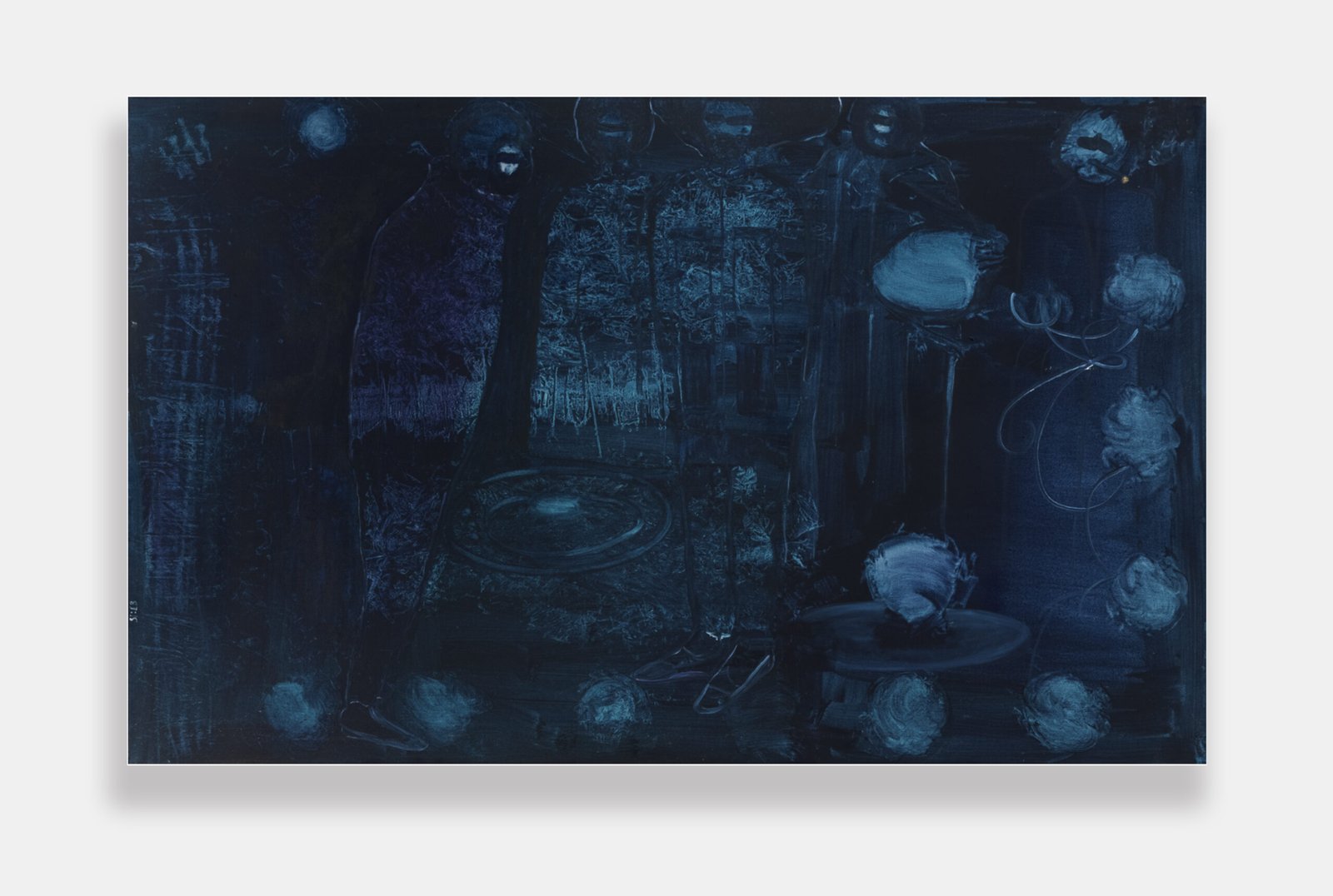
On the third floor, large blue canvases further extend Hart’s experimental attempts to connect auditory impressions with visual rhythm in space, unfolding a field of intentional expression. As night settles into these blue-violet scenes, human perception is stretched and amplified within this state of stillness and calm, to the point that an imagined territory begins to emerge. Mountain rocks, commonly seen at the entrances of Lingnan residential compounds, float within the music as though staging a Brechtian epic theatre; Gong Linna’s “Tan Te” is transformed into a graphic score through sequences of bodily gestures; the flickering views when racing through the highway interchanges play out frame by frame like a strip of celluloid. Within these works, diverse sounds and materials collide through his spontaneous brushwork, reverberating within a mysterious blue-violet chromatic field. Beyond the visual, the sound of urban spaces recorded by Hart roams alongside the images, so that beneath the surface of these deep and tranquil paintings there pulses the rise and fall of Chinese shanshui, the rhythm of sound, and an ongoing dialogue of feeling. They are at once the glow of night, the tide of the sea, and a portrait of everyday life intoxicated by and immersed within this atmosphere.

▲安德鲁·皮埃尔·哈特,《Night drive G.Z.》, 布面油画, 画芯尺寸:100×160cm, ©艺术家及弄空间


象征广州街头文化的电动车,以及掼蛋桌并置于三楼空间中,花生壳堆叠桌面之上,自动发牌机不定时吐出扑克并发出一连串声响。这些日常场景邀请观众以更加亲密而积极的方式看待生活、行为、娱乐、游戏和艺术创作之间的交融。在小房间内,与此场景对应的三块竖向屏幕同时放映广州公共空间中自由而热烈的日常景象。随着哈特的镜头移动,观众穿梭于他收集到每个真实可感之瞬间的声音记忆,视觉与听觉的感知共同流散入四面八方。艺术家、观者,乃至场所本身,同声场一道周游于羊城大大小小,僻静或喧嚣之处。声音再次跨越语言与姿态,成为人与人、人与物、人与世界之间最为直观而温情的连接方式。


栖身于街头的倾听与观察中,哈特重建关于广州的表达场域,思考自身、社群甚至观众所经历的文化变迁,并邀请观众与他一道通过媒材、肢体同音律的互动和周旋,即兴奏响对于多样生活和生命经验的强音。


弄空间
2026.04.21
文|周睿
编辑|Lucy
© All rights reserved by the artists and LongSpace

安德鲁·皮埃尔·哈特,弄空间个展: 时霎有声-广州, 现场制作

LongSpace is pleased to announce that a solo exhibition by British multi‑media artist and experimental music producer Andrew Pierre Hart will open on 25 April 2026. Hart’s practice arises from his cross‑modal understanding and perception of the flowing intersections between colour and sound, generating a state of co‑existence and resonance across multiple media. This exhibition will present a body of work created during his time living in Guangzhou, including oil paintings, installations, documentary video, experimental sound and live performance. Observation and research into specific local cultures runs through Hart’s most compelling works; this exhibition focuses on Chinese culture: particularly the influence of Lingnan culture on his practice, and foregrounds the intertextual relationships that emerge where diverse cultures meet and intersect.

On the second floor, twenty-three small-format oil paintings and a site-specific sound work are presented, tracing the fleeting impressions Hart captured while moving through Guangzhou’s many spaces. Whether broad vistas of everyday life or intimate, almost imperceptible close-up moments, the figures and objects in these paintings are lifted out of their original contexts and set against fields of solid colour. The ease of his brushwork, together with the sounds playing in the gallery, echoes the atmosphere of the short video works on the third floor, where the flowing ambient sound is woven together with the vividly fragmented scenes on screen, turning the exhibition space into a rich site for listening, sensing and participation. He hears the rustling wind above the cable cars, the bustling chatter of friends in conversation, the waterfall-like rush of pouring tea, and the rising, faintly humorous cries of pain during cupping treatments. He sees bodies leaping and dancing in fluid motion, the light and colourful presence of portable toys, and the ceaseless traffic and shifting silhouettes that animate the city streets. In this cross-modal process, he improvises a relationship between rhythm and painterly mark, allowing the myriad phenomena and sounds of Lingnan to circulate through his artistic practice and give rise to a fresh, vividly sensorial world.

On the third floor, large blue canvases further extend Hart’s experimental attempts to connect auditory impressions with visual rhythm in space, unfolding a field of intentional expression. As night settles into these blue-violet scenes, human perception is stretched and amplified within this state of stillness and calm, to the point that an imagined territory begins to emerge. Mountain rocks, commonly seen at the entrances of Lingnan residential compounds, float within the music as though staging a Brechtian epic theatre; Gong Linna’s “Tan Te” is transformed into a graphic score through sequences of bodily gestures; the flickering views when racing through the highway interchanges play out frame by frame like a strip of celluloid. Within these works, diverse sounds and materials collide through his spontaneous brushwork, reverberating within a mysterious blue-violet chromatic field. Beyond the visual, the sound of urban spaces recorded by Hart roams alongside the images, so that beneath the surface of these deep and tranquil paintings there pulses the rise and fall of Chinese shanshui, the rhythm of sound, and an ongoing dialogue of feeling. They are at once the glow of night, the tide of the sea, and a portrait of everyday life intoxicated by and immersed within this atmosphere.

▲安德鲁·皮埃尔·哈特,《Night drive G.Z.》, 布面油画, 画芯尺寸:100×160cm, ©艺术家及弄空间


象征广州街头文化的电动车,以及掼蛋桌并置于三楼空间中,花生壳堆叠桌面之上,自动发牌机不定时吐出扑克并发出一连串声响。这些日常场景邀请观众以更加亲密而积极的方式看待生活、行为、娱乐、游戏和艺术创作之间的交融。在小房间内,与此场景对应的三块竖向屏幕同时放映广州公共空间中自由而热烈的日常景象。随着哈特的镜头移动,观众穿梭于他收集到每个真实可感之瞬间的声音记忆,视觉与听觉的感知共同流散入四面八方。艺术家、观者,乃至场所本身,同声场一道周游于羊城大大小小,僻静或喧嚣之处。声音再次跨越语言与姿态,成为人与人、人与物、人与世界之间最为直观而温情的连接方式。


栖身于街头的倾听与观察中,哈特重建关于广州的表达场域,思考自身、社群甚至观众所经历的文化变迁,并邀请观众与他一道通过媒材、肢体同音律的互动和周旋,即兴奏响对于多样生活和生命经验的强音。


弄空间
2026.04.21
文|周睿
编辑|Lucy
© All rights reserved by the artists and LongSpace